
Why Dublin Roof Repair Matters for Ohio Homeowners
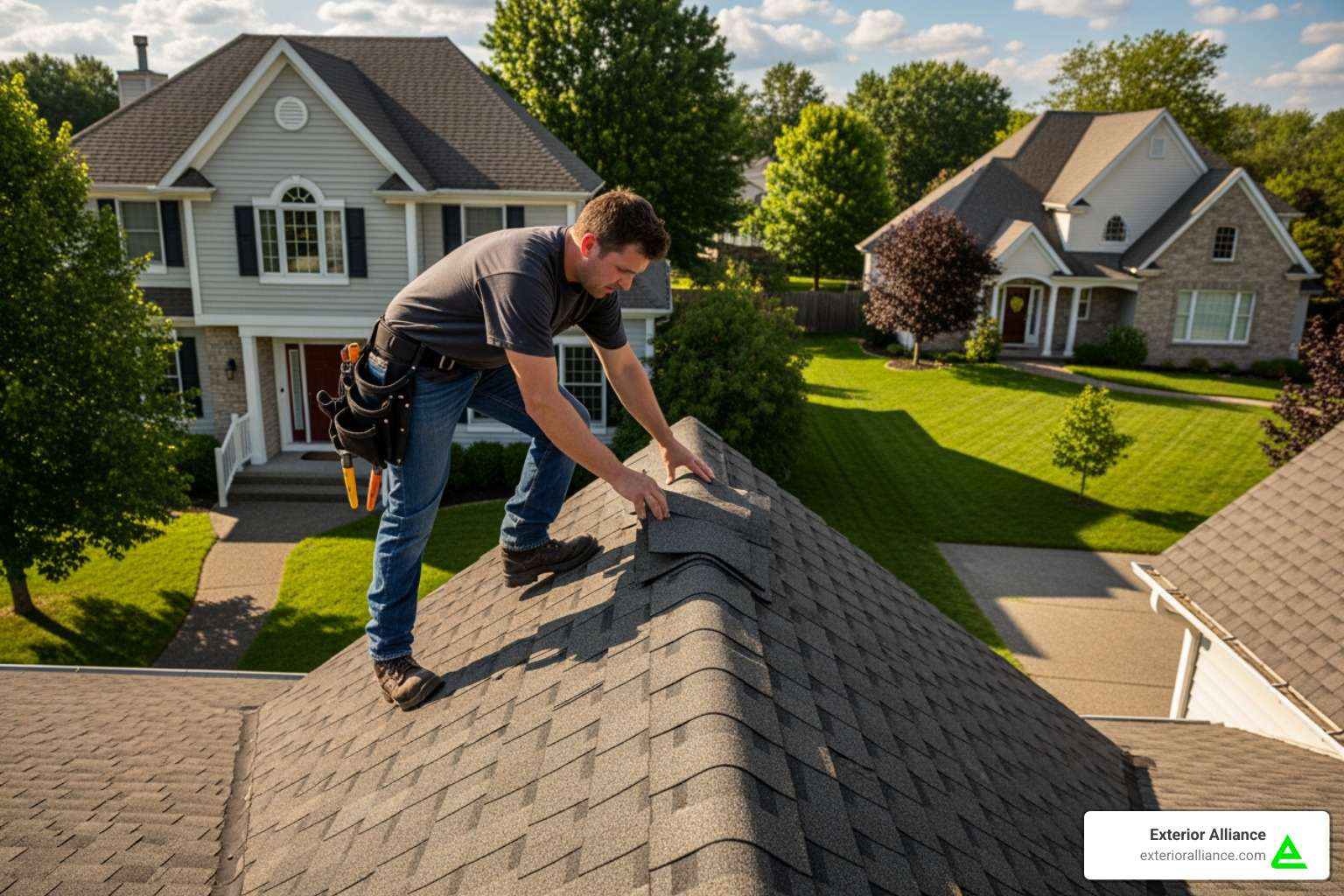
Dublin roof repair is essential for protecting your home from Ohio’s harsh weather conditions. Whether you’re dealing with storm damage, aging shingles, or mysterious leaks, understanding your repair options helps you act quickly and avoid costly future problems.
Quick Answer: Signs You Need Dublin Roof Repair
- Visible Damage: Missing, cracked, or curling shingles
- Interior Issues: Water stains on ceilings or walls, attic moisture
- Gutter Problems: Shingle granules collecting in gutters
- Age Concerns: Roofs over 20 years old showing wear
- Storm Impact: Damage after high winds, hail, or heavy snow
- Energy Spikes: Unexplained increases in heating or cooling costs
Your roof faces serious challenges in Dublin, Ohio. Winter brings heavy snow loads and ice dams. Spring and summer deliver severe thunderstorms with damaging winds and hail. Fall’s temperature swings cause materials to expand and contract, accelerating wear.
According to local roofing contractors, Dublin’s weather patterns create unique repair needs. Storm damage is particularly common, with many homeowners needing emergency repairs after severe weather events. The good news? Catching problems early through regular inspections can prevent minor issues from becoming major expenses.
Many Dublin homeowners worry about two key challenges: finding a trustworthy contractor and navigating insurance claims for storm damage. This guide addresses both concerns while helping you understand when repairs make sense versus a full replacement.
The roofing companies serving Dublin typically offer comprehensive services including emergency repairs, insurance claim assistance, and warranties ranging from 5 to 30 years on their work. Most provide free inspections and same-day quotes, with some offering 24/7 emergency service for urgent leaks or storm damage.
Identifying and Understanding Roof Damage
Your roof works hard every single day to protect your family and everything you own. But here’s the thing—even the toughest roofs eventually show signs of wear, especially in Dublin’s challenging climate. Knowing what damages your roof and spotting problems early can save you thousands of dollars and a lot of stress.
The Impact of Ohio’s Weather on Your Roof
If you’ve lived in Dublin for more than a year, you know our weather doesn’t mess around. We get the full Midwestern experience—brutal winters, stormy springs, hot summers, and everything in between. Each season brings its own challenges for your roof.
Storm damage tops the list of reasons homeowners need Dublin roof repair. Our spring and summer thunderstorms can be downright fierce. High winds don’t just rustle tree branches—they can lift shingles right off your roof, break the protective seals, and let water sneak in where it doesn’t belong. Wind also turns loose branches and debris into projectiles that can puncture or dent your roofing materials.
Then there’s hail. Even small hailstones can bruise shingles, knock off the protective granules, and dent metal components like flashing and gutters. The tricky part? Hail damage isn’t always obvious right away, but it quietly shortens your roof’s lifespan and creates pathways for future leaks. We’ve seen it all, and that’s why we specialize in storm damage roofing in Ohio.
Winter brings its own headaches with heavy snow and ice dams. Here’s how ice dams form: heat escaping from your attic melts the snow on your roof. That water runs down until it hits the colder eaves, where it refreezes. Now you’ve got a dam of ice blocking proper drainage. More melting snow backs up behind it, and suddenly water is seeping under your shingles and into your home—damaging ceilings, walls, and insulation.
Don’t forget about UV degradation. The sun beats down on your roof year-round, and those ultraviolet rays slowly break down asphalt shingles. They dry out, become brittle, and lose their protective granules. It’s like leaving a plastic toy in the sun—eventually, it cracks and fades.
Temperature swings add another layer of stress. Ohio’s dramatic shifts between hot and cold—sometimes in the same day—cause your roofing materials to expand and contract repeatedly. This constant movement weakens seams, loosens fasteners, and creates cracks in flashing. Over time, these small issues add up.
All these weather conditions work together to reduce your roof’s longevity. The key is catching problems early with timely Dublin roof repair before a small issue becomes a major disaster.
Key Signs You Need a Professional Dublin Roof Repair
Your roof rarely gives up without warning. It usually sends you signals—sometimes subtle, sometimes not so subtle—that something’s wrong. Learning to recognize these signs can be the difference between a simple repair and a catastrophic failure.
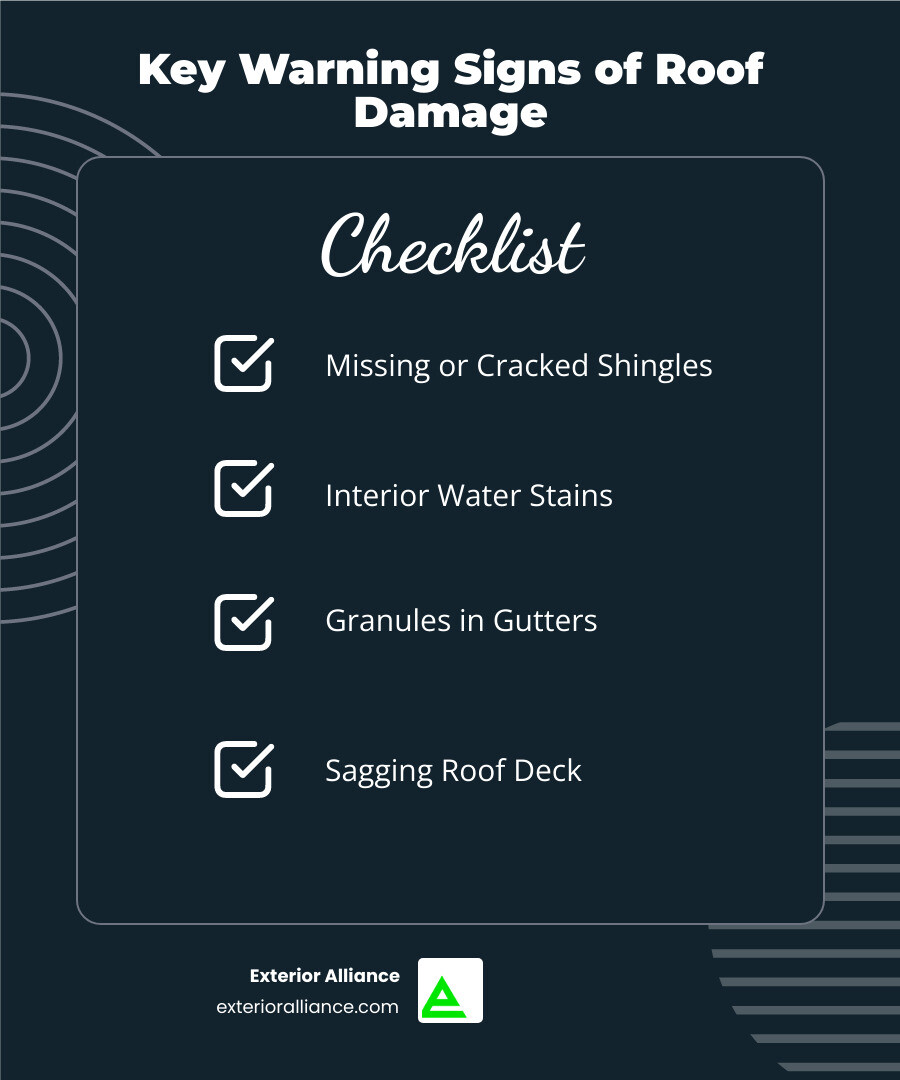
Leaks and water stains are the most alarming signs. If you spot brown or yellow stains on your ceiling or walls, water has already breached your roof’s defenses. Even small stains deserve your attention—they often point to bigger problems hiding in your attic or walls. Don’t wait on these.
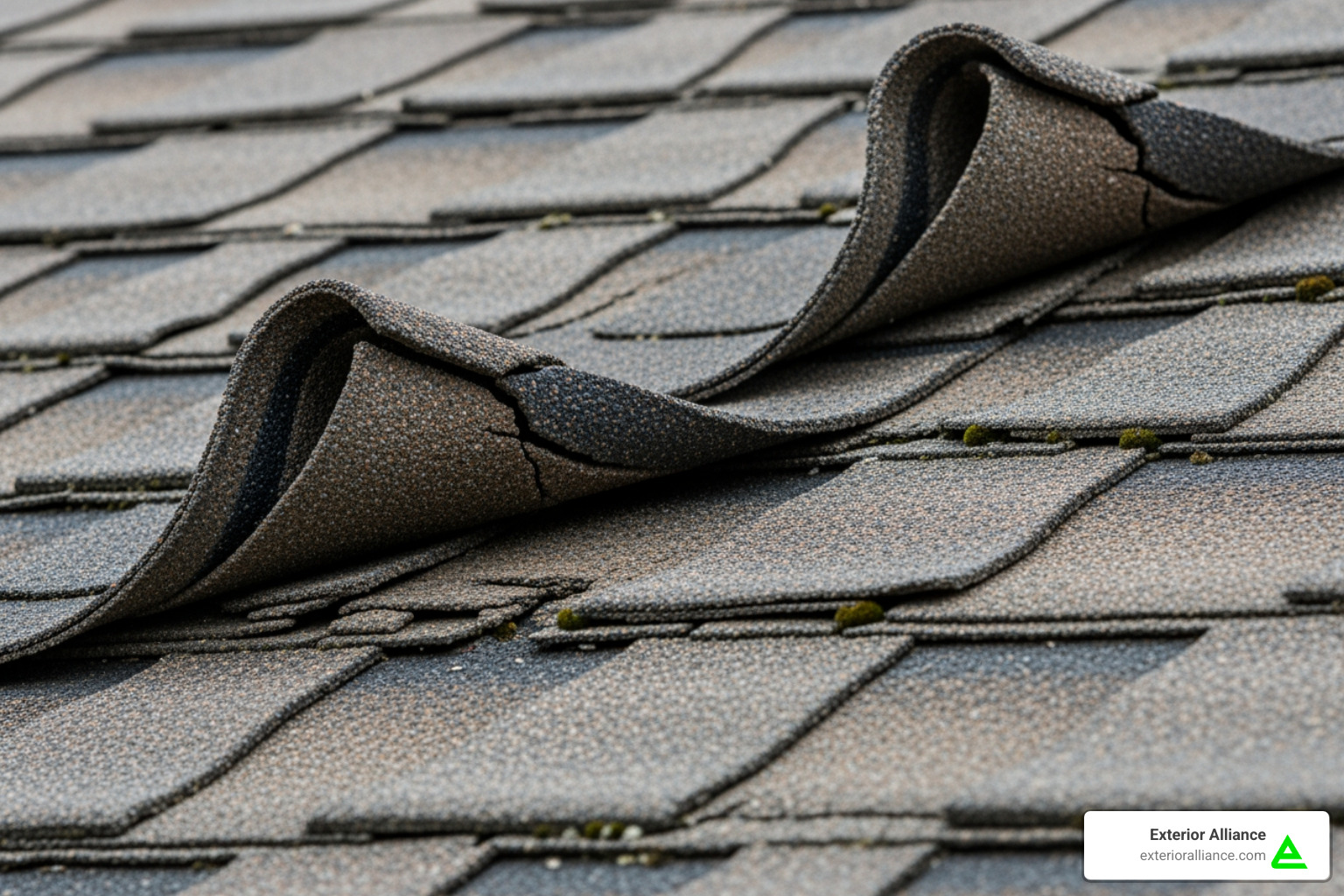
Take a look at your roof from the ground (stay safe—no need to climb up there yourself). Are there missing or damaged shingles? Look for gaps, cracks, curling edges, buckled areas, or shingles that look like they’re blistering. Each of these signals that your roof’s protection is compromised.
Next time it rains, check your gutters. Finding granules in your gutters—those sand-like particles that look like coarse pepper—means your shingles are deteriorating. These ceramic granules protect shingles from UV rays, and losing them accelerates aging.
A sagging roof deck is serious business. If your roofline looks like it’s drooping or dipping anywhere, you need immediate professional help. This could mean damaged decking, weakened rafters, or trapped moisture—all structural concerns that won’t fix themselves.
Look at the flashing around your chimney, vents, skylights, and roof valleys. These metal strips channel water away from vulnerable spots. If they’re bent, cracked, rusted, or missing, water has an easy entry point into your home.
Finally, watch your utility bills. Higher energy costs without explanation might mean your roof is failing. Damaged or poorly insulated roofs let expensive heated or cooled air escape, forcing your HVAC system to work overtime.
Some warning signs demand immediate action: active leaks dripping into your home, large sections of missing shingles, visible holes in the roof, obvious structural sagging, or strong musty odors that suggest hidden mold or rot. If you spot any of these urgent issues, call a professional right away.
Repair or Replace? A Homeowner’s Guide
This is the big question every homeowner faces when roof problems show up. Should you patch things up or invest in a complete replacement? The answer depends on several important factors.
Your roof’s age matters most. Most asphalt shingle roofs last about 20 to 25 years. If your roof is approaching or past that milestone, even a minor repair might just be putting a band-aid on a system that’s failing overall. On the other hand, if your roof is only 10 years old, repairs usually make perfect sense.
Consider the extent of damage. Did you lose a few shingles in last week’s windstorm? That’s a straightforward repair. But if hail damaged shingles across your entire roof, or if age and weather have created problems in multiple areas, replacement often becomes the smarter choice.
Run the numbers with a cost-benefit analysis. If you’re paying for repairs every year, or if a single repair costs half as much as a new roof, replacement starts looking pretty good. We offer free estimates to help you compare these options honestly—no pressure, just facts.
Think about your future plans too. Planning to sell in the next few years? A new roof significantly boosts curb appeal and resale value. Potential buyers love knowing they won’t need a new roof for decades. If you’re staying put long-term, investing in a quality replacement gives you peace of mind and better long-term value.
Don’t underestimate the benefits of regular maintenance. Annual inspections, keeping gutters clean, checking flashing, and fixing small problems quickly can extend your roof’s life by years. Sometimes the best investment isn’t a new roof—it’s taking care of the one you have.
Here’s a quick comparison to guide your decision:
| Criteria | Consider Repair If… | Consider Replacement If… |
|---|---|---|
| Age | Roof is less than 15-20 years old | Roof is 20+ years old or near end of expected life |
| Damage Extent | Damage is localized to one area | Damage is widespread across multiple sections |
| Cost | Repair costs less than 30% of replacement | Repairs exceed 30-50% of replacement cost |
| Frequency | First or second repair needed | Multiple repairs needed within a few years |
| Future Plans | Staying in home short-term (1-5 years) | Planning to stay long-term (10+ years) |
| Energy Efficiency | Energy bills remain stable | Noticeable increase in heating/cooling costs |
Still not sure? That’s completely normal. Every roof and situation is unique. A professional inspection can give you the clear answers you need to make the right decision for your home and budget.
Local Roofers for Every Dublin Neighborhood
When you are ready for an inspection, our Dublin, Ohio roofing team is minutes away. We publish neighborhood-specific guides for Muirfield Village, Tartan West and Wyandotte Woods, plus the nearby communities of Shawnee Hills and Tartan Fields. Siding damaged in the same storm? Our Dublin James Hardie siding crew can handle both.
