
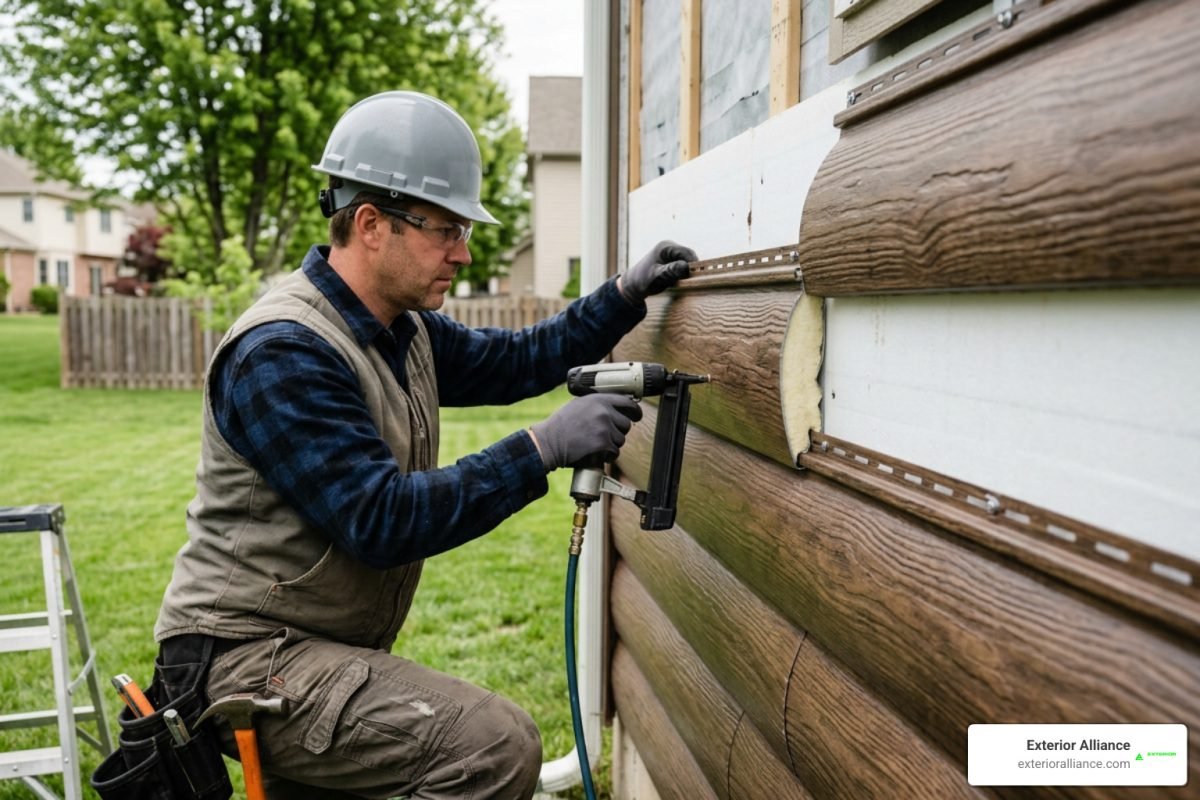
Key Benefits of Artificial Log Cabin Siding Over Natural Timber
Artificial log cabin siding allows homeowners and builders to capture the rustic warmth of heavy timber while sidestepping the severe rot, pest, and maintenance vulnerabilities of organic wood. Engineered synthetic systems deliver non-combustible Class A fire ratings, complete insect immunity, built-in thermal insulation, and long-term durability. Working alongside professional siding contractors in Ohio allows homeowners to achieve this frontier charm on standard, modern stud framing without the structural settling and air leakage common in traditional log construction.
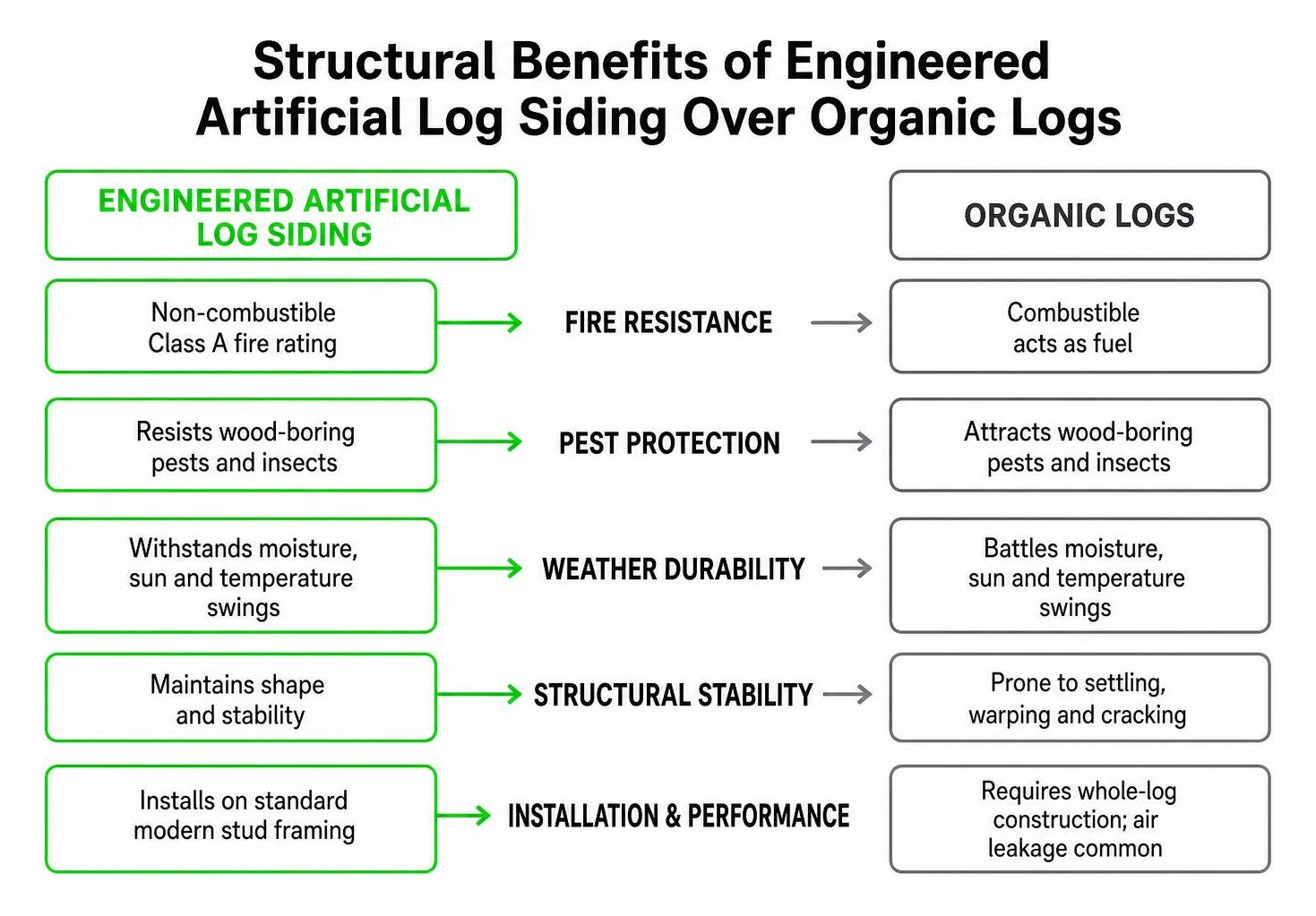
Fire, Pest, and Weather Protection
Natural timber functions as fuel in a fire and acts as a dinner bell for wood-boring pests. In contrast, modern synthetic and engineered alternatives provide unmatched exterior defense:
- Fire Resistance: Heavy-gauge steel and fiber cement formulations carry non-combustible Class A fire ratings. In fire-prone wooded areas, this difference is critical for safety and property preservation.
- Impact and Hail Defense: Options like 26-gauge steel log siding achieve Class 4 impact ratings—the highest industry rating available. They easily deflect wind-blown debris and heavy Midwest hail that would severely dent or splinter raw cedar.
- Insect Immunity: Termites, carpenter ants, and powderpost beetles cannot penetrate or digest steel, concrete, or polyvinyl chloride (PVC).
- Moisture and Freeze-Thaw Resistance: Unlike organic wood that absorbs rainwater, expands, and splits when freezing winter temperatures arrive, synthetic materials maintain a tight moisture barrier that completely prevents rotting and fungal decay.
Long-Term Cost and Maintenance Savings
Maintaining an authentic log home requires deep pockets and constant labor. Traditional wood logs demand rigorous washing, sanding, caulking, chinking repair, and chemical re-staining every two to three years to stave off graying and dry rot.
If you find yourself frequently changing siding on house exteriors or spending thousands every few summers on scaffolding and stain, artificial profiles eliminate those recurring headaches. Synthetic log claddings feature factory-bonded, UV-stable finishes that never require re-staining or painting. Routine maintenance typically consists of nothing more than a quick spray with a standard garden hose to rinse away surface dust. Combined with energy-efficient insulated backings that cut monthly utility costs, these systems deliver exceptional 50-year lifecycle value.
Comparing the Major Types of Artificial Log Siding Materials
Not all synthetic log profiles are built the same way. Understanding the differences between core materials ensures you pick the right balance of price, realism, weight, and storm resistance for your property.
| Material Type | Average Lifespan | Impact & Fire Rating | Panel Weight | Relative Cost | Maintenance Level |
|---|---|---|---|---|---|
| Heavy-Duty Steel | 40–60+ Years | Class A Fire / Class 4 Impact | ~15.5 lbs/panel | Mid to High | Minimal (Hose rinse) |
| Concrete / GFRC | 50+ Years | Class A Fire / Class 4 Impact | 42–70 lbs/panel | High | Low (Periodic joint checks) |
| Foam-Backed Vinyl | 30–50 Years | Varies (Ignition-resistant) | ~3.9 lbs/piece | Budget-Friendly | Minimal (Hose rinse) |
| Fiber Cement | 30–50 Years | Class A Fire / Class 3-4 Impact | Moderate to Heavy | Moderate | Low (Periodic paint touch-up) |
Steel Artificial Log Cabin Siding Profiles
Insulated steel log siding represents one of the most durable innovations in modern building envelopes. Fabricated from heavy-duty 26-gauge steel (which is roughly 25% thicker than standard 29-gauge metal cladding), these panels deliver structural rigidity and complete resistance to warping.
Advanced manufacturing techniques utilize specialized roll-forming dies that imprint subtle, irregular knife cuts into the metal. As detailed in the Simulated Log Siding Panel with Hew Lines – Patent application, randomized longitudinal bends eliminate the fake, repetitive look of uniform cylinders, replicating the organic draw-knife marks left by pioneer woodworkers.
Topped with high-performance PVDF fluoropolymer finishes (such as Kynar 500) and backed by molded expanded polystyrene (EPS) foam, steel siding provides an added R-3.57 thermal barrier while resisting chalking and color fading for decades.
Concrete and Fiber Cement Artificial Log Cabin Siding
For homeowners seeking the most authentic, deeply textured wood-grain replication possible, Glass Fiber Reinforced Concrete (GFRC) and fiber cement log claddings are exceptional choices.
Molded directly from authentic hand-hewn timbers, these dense materials capture deep grain crevices, natural knots, and authentic bark lines. They provide complete non-combustibility and immunity to rot. However, when comparing Hardie board vs vinyl siding or dense concrete formulations, structural weight is a significant factor. With concrete panels weighing anywhere from 42 to 70 pounds each, installations often require structural wall framing evaluations and specialized multi-person installation crews.
Foam-Backed Vinyl Log Cabin Siding
Foam-backed vinyl log siding is the most cost-effective way to achieve a rustic cabin look. Manufactured from durable .041-inch polyvinyl chloride (PVC) resin, these curved profiles integrate high-density contoured foam cores inside the concave back of each panel.

The engineering principles behind modern interlocking vinyl log systems, highlighted in historic designs like Simulated log siding (US Patent 6647687), allow panels to shed water efficiently while preventing trapped condensation. Vinyl log boards are lightweight (around 3.9 pounds per 12-foot board), easy to cut, and snap securely into specialized 1-1/8 inch receiver trims. Backed by warranties that often reach 50 years, vinyl siding provides reliable insect and moisture protection for cost-conscious cabin renovations.
Aesthetic Realism: Achieving the Authentic Hand-Hewn Log Look
Early generations of faux log siding often suffered from a plastic sheen and repetitive, machine-stamped curvature that looked unconvincing from the curb. Today’s premium manufacturers have solved this challenge through advanced structural embossing and multi-tone digital coating processes.
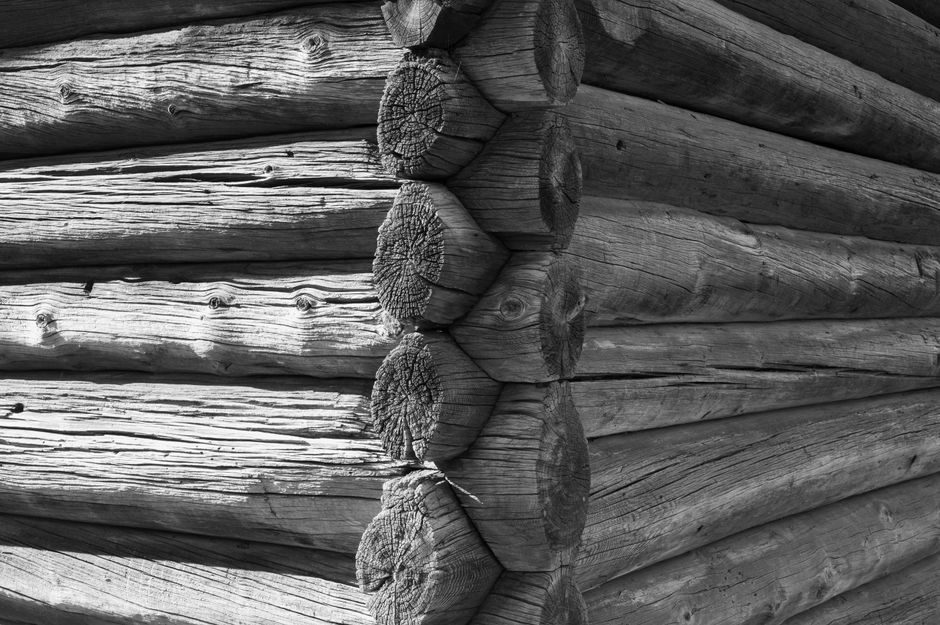
Achieving the best home siding in Ohio means balancing structural performance with period-accurate details:
- Hand-Hewn Surface Contours: Instead of smooth, machine-rounded surfaces, top-tier panels incorporate random hew marks, flat-faced timber hewing, and distinct wood-grain texture variations that scatter reflected light naturally.
- Convex Curvature and Shadow Lines: Engineered outward bows (often extending 1-1/8 inches out from the wall plane) cast deep, natural shadow lines across lower courses.
- Integrated or Modular Chinking Lines: Historic log structures used chinking—a mortar-like compound packed between raw log courses. Modern artificial systems replicate this look with contrasting, recessed channels (usually 5/8-inch wide) built directly into the interlocking panel flanges or installed as separate accent strips.
- Realistic Corner Systems: Authentic log cabins feature interlocking saddle-notch, dovetail, or heavy butt-and-pass corner joinery. High-end synthetic systems feature matching corner post enclosures that hide panel ends and mirror full-timber construction.
Installation Complexity, Weight, and Structural Considerations
When planning a siding project, structural weight and attachment mechanics dictate both labor costs and timelines.

Concrete log systems require substantial structural capacity. Adding hundreds of square feet of 70-pound panels to an existing wall framing system may require engineering assessments, foundation checks, and heavy-duty mechanical anchors.
In contrast, 26-gauge insulated steel panels (roughly 15.5 pounds per panel) and vinyl siding profiles are lightweight enough to be installed directly over existing exterior sheathing or standard 2×4 and 2×6 framing without structural modification. Utilizing interlocking slide-lock channels, single installers can securely seat each course into the panel below and fasten through pre-punched slotted hems. This makes professional siding installation in Columbus fast, precise, and weather-tight.
Frequently Asked Questions About Simulated Log Siding
How long does artificial log siding typically last?
Most engineered artificial log systems have an expected functional lifespan of 40 to 60+ years. High-grade steel and fiber-cement options are backed by 20- to 30-year warranties against chalking and fading, while quality vinyl profiles frequently carry 50-year limited lifetime warranties.
Can faux log siding be installed over existing exterior walls?
Yes. Lightweight profiles like insulated steel and vinyl can readily be retrofitted over sound existing siding, plywood sheathing, or oriented strand board (OSB). The primary requirement is installing a high-quality weather-resistant barrier (house wrap) and matching starter strips and deeper corner trims (such as 1-1/8-inch receivers) to accommodate the outward curvature of the log profile.
How does the insulation value of faux log siding compare to real wood?
While natural wood logs offer modest natural insulating properties, they are prone to air leakage as timbers shrink and chinking cracks. Artificial log panels backed by custom-contoured expanded polystyrene (EPS) foam fill the panel’s hollow cavity, delivering an added R-3.57 thermal boost. This continuous exterior insulation layer breaks thermal bridging across wall studs and dampens exterior street noise.
Choosing the Right Rustic Exterior for Your Home
Choosing the right siding is all about matching your aesthetic vision with materials built to handle local weather patterns. At Exterior Alliance, we specialize in helping property owners throughout Dublin and the Greater Columbus area protect and upgrade their homes with durable, climate-engineered exterior systems.
Whether you are seeking the authentic character of wood siding for house designs or exploring modern, maintenance-free synthetic alternatives, our experienced team provides fast, transparent guidance from initial design to final cleanup. Contact us today to schedule your consultation and receive a comprehensive satellite-based exterior estimate.
