
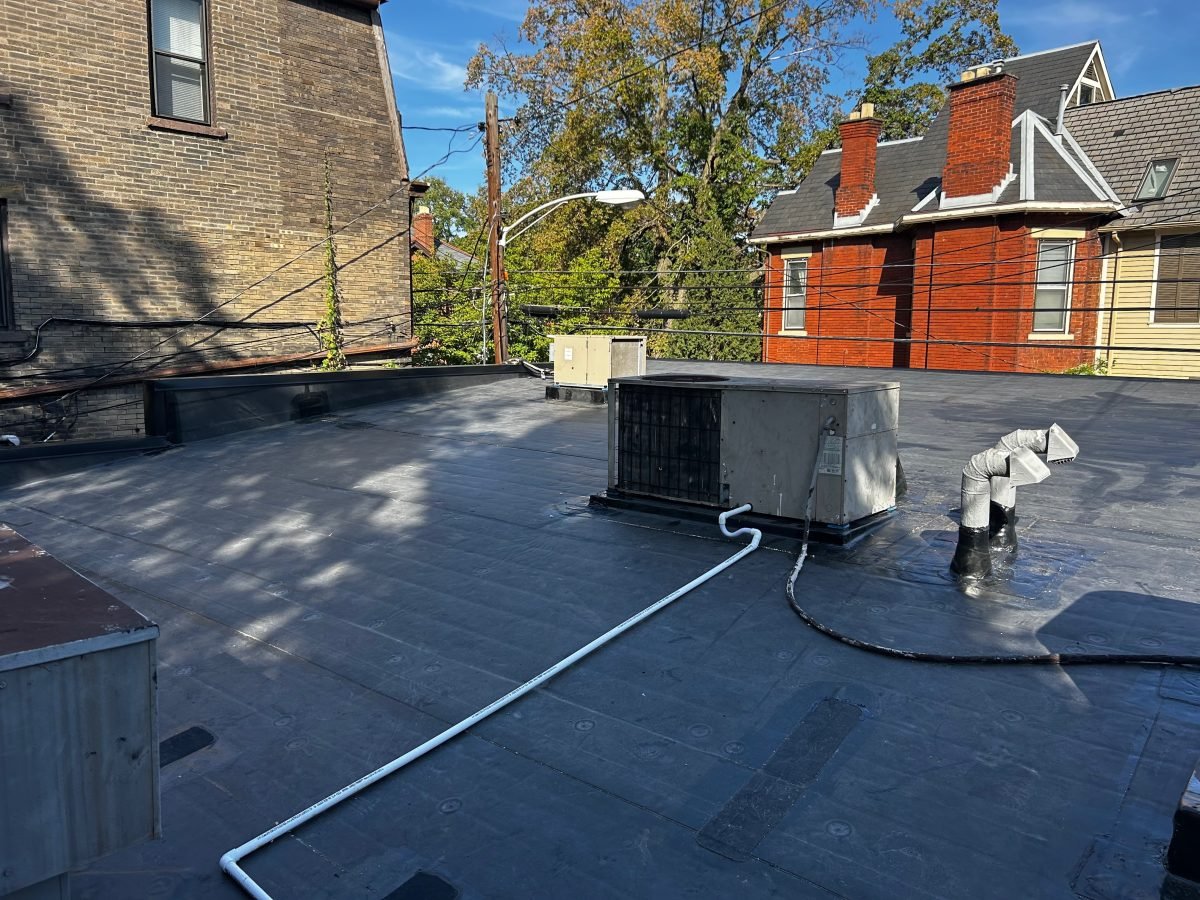
A full roof replacement on a commercial building in Columbus runs anywhere from $8 to $25 per square foot depending on the system. For a 20,000 square foot flat roof, that’s $160,000 to $500,000. Roof coating is how building owners and property managers avoid that number — at least for another 10 to 15 years. When a roof’s membrane is still structurally sound but showing age, a properly applied roof coating system can restore waterproofing performance, reflect UV, and extend service life at roughly 20 to 30 percent of replacement cost.
This isn’t a temporary patch. Modern roof coating systems are engineered products with manufacturer warranties, specific application requirements, and measurable performance standards. Ohio building owners are increasingly choosing coating over replacement — and for the right roofs, it’s a legitimate long-term strategy, not a short-term fix.
What Is Roof Coating?
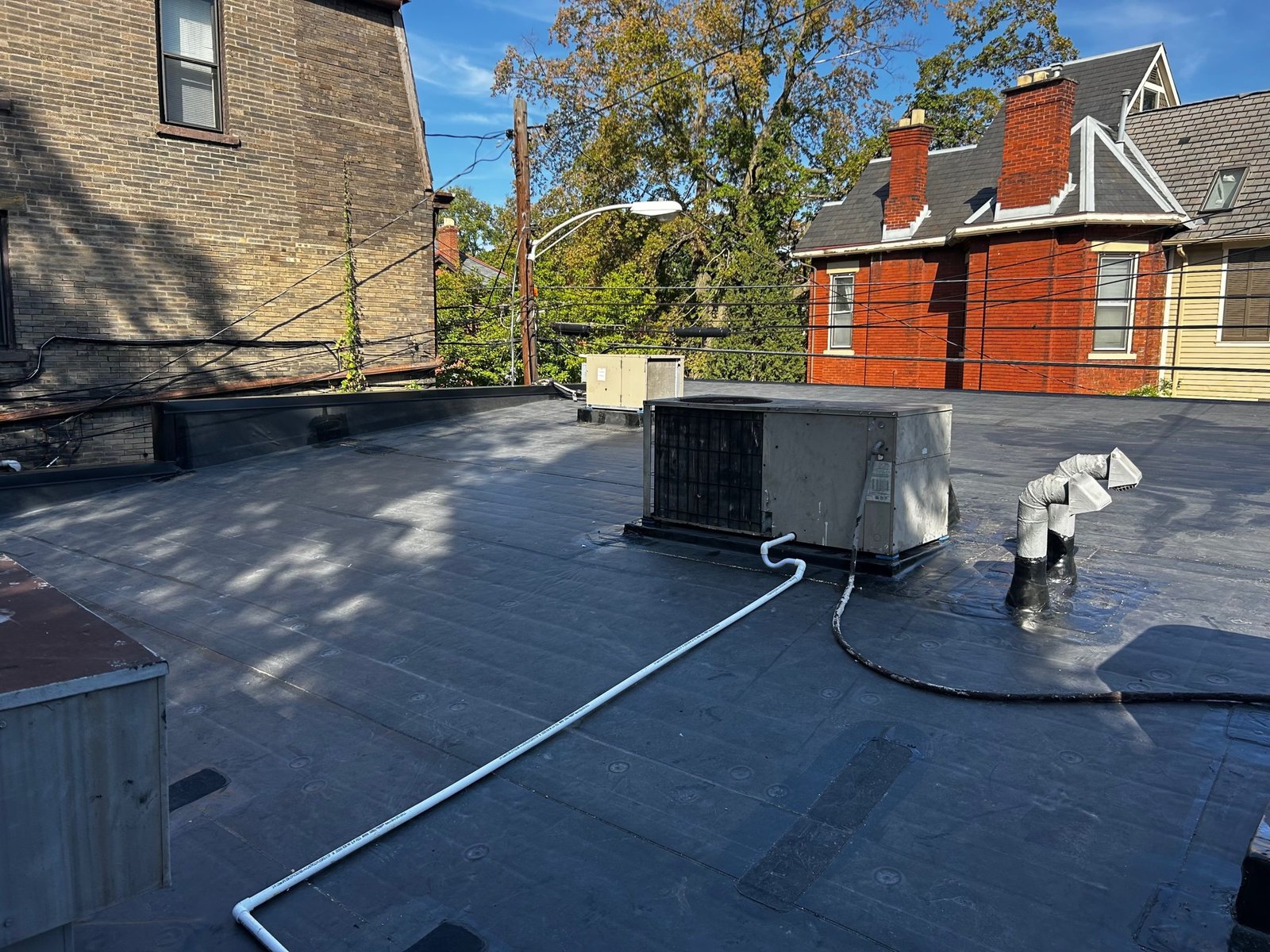
Roof coating is a fluid-applied membrane that bonds directly to an existing roof surface, forming a seamless, waterproof layer when cured. It’s applied by spray, roller, or brush depending on the product and substrate — and it covers the entire roof surface including seams, flashings, and penetrations that are typically the first points of failure on aging flat roofs.
Unlike a patch, coating covers the full surface. Unlike replacement, it doesn’t require tearing off the existing system. The existing roof serves as the substrate — the coating bonds to it, seals it, and in most cases adds meaningful reflectivity that reduces cooling loads in summer months.
Roof coatings are primarily used on low-slope and flat roof systems: TPO, EPDM, modified bitumen, built-up roofing, and metal. They’re not typically applied to steep-slope asphalt shingle roofs. For commercial roofing applications in Columbus — warehouses, retail centers, office buildings, multi-family properties — coating is one of the most cost-effective tools available.
Types of Roof Coatings
Not all roof coatings are the same product. The right choice depends on your existing roof system, climate exposure, and performance priorities. Here’s how the main types compare:
Silicone Roof Coating
The strongest performer for ponding water resistance. Silicone stays flexible and doesn’t degrade in standing water — a significant advantage for Columbus flat roofs that don’t drain perfectly. It reflects UV effectively and holds up well in freeze-thaw conditions. The downsides: silicone attracts dirt over time, which reduces reflectivity, and it can be slippery when wet. It’s also harder to recoat later — you’re generally committed to silicone once you apply it.
Best for: Flat roofs with drainage issues, EPDM and TPO substrates, high UV exposure applications.
Acrylic Roof Coating
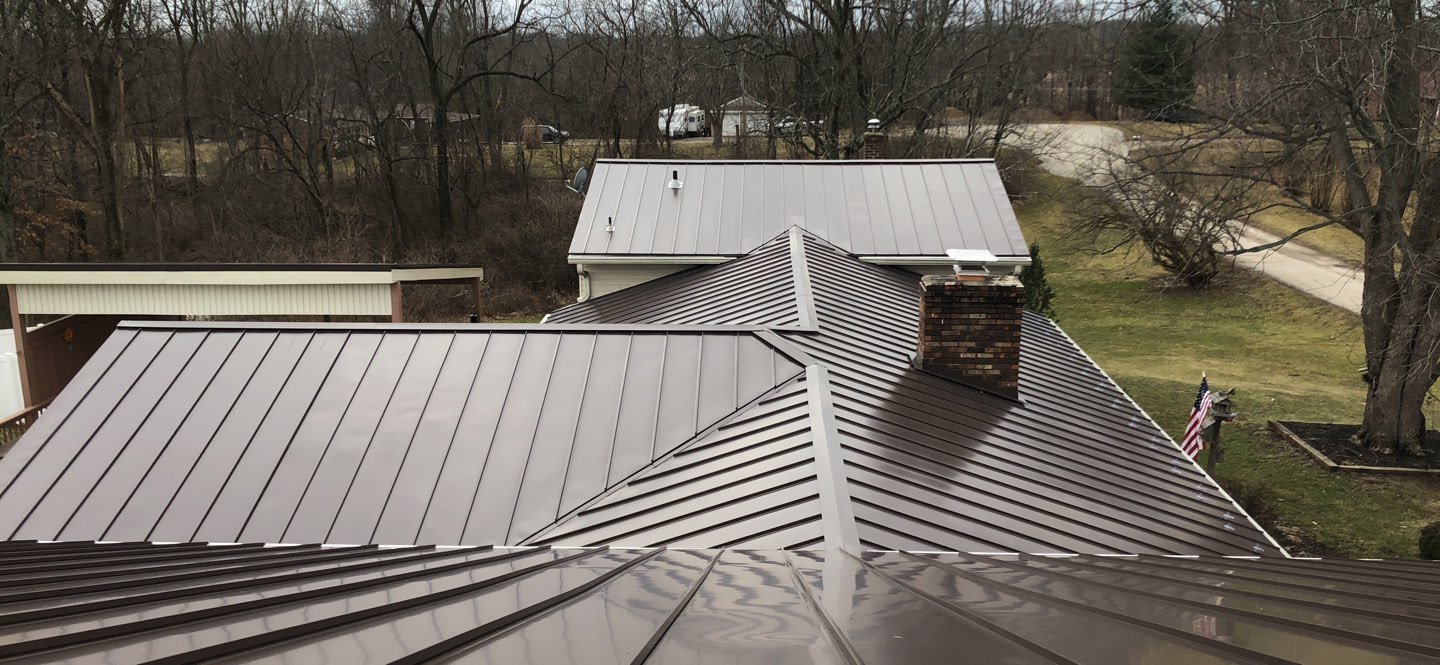
Water-based, easy to apply, and the most reflective option available — acrylic coatings deliver strong energy performance in climates with significant solar exposure. They’re cost-effective and easy to recoat when the time comes. The limitation is ponding water: acrylic softens when submerged for extended periods, which makes it a poor choice for roofs with drainage problems. In Columbus’s wet springs, that matters.
Best for: Metal roofs, well-draining low-slope roofs, applications where energy efficiency is the primary goal.
Elastomeric Roof Coating
Elastomeric is a category rather than a specific chemistry — it refers to any coating that stretches and returns to shape. Both silicone and acrylic can be elastomeric. In practice, when contractors use the term, they’re usually referring to thick-film acrylic or butyl rubber-based products with high elongation ratings. These handle thermal movement well, which matters on metal roofs and in climates with significant temperature swings — like Ohio.
Best for: Metal roofs, roofs with significant expansion and contraction, buildings in high-wind zones.
Polyurethane Roof Coating
The most impact-resistant option. Polyurethane coatings hold up to foot traffic, hail, and mechanical abuse better than silicone or acrylic. They come in aromatic (less UV stable, needs a topcoat) and aliphatic (UV stable, more expensive) formulations. For roofs that see regular rooftop traffic — HVAC maintenance, equipment access — polyurethane is worth the premium.
Best for: Roofs with frequent foot traffic, high-impact environments, buildings with heavy rooftop mechanical equipment.
Roof Coating vs. Roof Replacement — When Each Makes Sense
Coating is not always the right answer. Here’s an honest breakdown of when each approach makes sense:
Roof coating is appropriate when:
- The existing membrane is structurally sound — no widespread delamination, blistering, or saturated insulation
- Leaks are minor and localized, not systemic across the roof
- The roof has 5–15 years of remaining life that coating can extend another 10–15 years
- Budget constraints make replacement impractical in the near term
- The building owner wants to defer a capital expense while maintaining weathertight performance
Roof replacement is the right call when:
- The insulation is wet — saturated insulation doesn’t dry out, loses R-value, and will continue to cause problems regardless of what’s applied over it
- The membrane is failing across large areas, not just at seams and penetrations
- The roof has already been coated once and is approaching the end of that coating’s service life with no remaining membrane life underneath
- Structural deck issues are present
An infrared scan or core sample will tell you definitively whether your roof is a candidate for coating. We include that assessment as part of our pre-coating inspection. See our flat roof inspection checklist for a full breakdown of what that process covers, and compare coating vs. commercial roof replacement costs before making a decision.
How Much Does Roof Coating Cost in Ohio?
Roof coating cost per square foot in Columbus depends on the coating type, number of coats, roof size, and substrate condition. Here are current market ranges for Central Ohio commercial applications:
| Coating Type | Cost Per Square Foot (Installed) | Expected Service Life |
|---|---|---|
| Acrylic (elastomeric) | $0.75 – $1.50 | 10–15 years |
| Silicone | $1.25 – $2.25 | 15–20 years |
| Polyurethane | $1.75 – $3.00 | 15–20 years |
| Full roof replacement (comparison) | $8.00 – $25.00 | 20–30 years |
On a 15,000 square foot commercial roof, a silicone coating system runs approximately $19,000 to $34,000 installed — compared to $120,000 to $375,000 for full replacement. Even accounting for the shorter service life, the cost-per-year calculation strongly favors coating on roofs that qualify.
Factors that affect your specific quote include roof accessibility, number of penetrations, extent of prep work and repairs needed before coating, and whether a primer coat is required for the substrate. Compare against our roof replacement cost guide to run the full numbers for your building.
Best Roof Coating for Flat Roofs & Commercial Buildings
For Columbus commercial properties — which are predominantly flat or low-slope — silicone is generally the top-performing coating choice. Here’s why it fits Ohio conditions:
- Ponding water resistance is critical on flat roofs where drainage is imperfect — silicone handles submersion without degrading
- Ohio’s freeze-thaw cycle requires a coating that stays flexible at low temperatures — silicone retains elasticity down to well below freezing
- Reflectivity reduces cooling loads during Columbus’s humid summers — silicone delivers high initial solar reflectance
- Long service life with minimal maintenance — once applied correctly, silicone systems require little intervention beyond periodic inspections
Acrylic is the right call on metal roofs with good drainage, particularly when energy performance is the primary objective. Polyurethane makes sense for rooftops with heavy traffic or equipment exposure.
If you’re unsure which system your roof qualifies for, our flat roof repair and coating team will assess the substrate and give you a straight recommendation. We also cover material selection in depth in our guide to the best material for flat roofs in 2026.
Our Roof Coating Process
Here’s what to expect when you work with Exterior Alliance on a roof coating project:
- Roof assessment and moisture scan. Before any coating discussion, we inspect the existing membrane for moisture intrusion, delamination, and structural issues. If the roof isn’t a coating candidate, we’ll tell you — and explain why.
- Surface preparation. This is where coating projects succeed or fail. The substrate must be clean, dry, and properly primed. We pressure wash, remove debris, treat any biological growth, and make localized repairs to seams, flashings, and penetrations before coating begins.
- Primer application (if required). Certain substrates — aged EPDM, oxidized metal, some modified bitumen — require a primer coat to ensure proper adhesion. Skipping this step is the most common cause of coating failure.
- Base coat application. Applied at the manufacturer-specified rate using spray equipment or roller depending on the product and roof configuration. Coverage rate determines dry film thickness, which determines performance and warranty eligibility.
- Topcoat / second coat. Most warranted systems require two coats to achieve minimum dry film thickness. The topcoat is applied after the base coat cures — timing depends on temperature and humidity conditions.
- Final inspection and documentation. We document the project with photos, mil thickness readings, and product data sheets. If a manufacturer warranty is part of the scope, we handle registration.
If active leaks exist, we address those through commercial roof leak repair before the coating process begins. Coating over an active leak doesn’t fix it — it hides it.
Frequently Asked Questions
How long does roof coating last?
Depending on the product, application quality, and roof substrate, a properly installed roof coating system lasts 10 to 20 years. Silicone systems on well-maintained substrates regularly reach the high end of that range in Ohio conditions. Most manufacturer warranties cover 10 to 15 years when installed by a certified applicator.
Can roof coating be applied over an existing coating?
Sometimes — it depends on what’s already there and its condition. Silicone can be recoated with silicone. Acrylic over silicone generally doesn’t adhere well. We test adhesion before recommending a recoating approach. If the existing coating is delaminating or has failed, it needs to come off before a new system is applied.
Does roof coating qualify for tax incentives or energy rebates?
Reflective roof coatings can qualify for energy-efficiency tax deductions under Section 179D for commercial buildings, and some utility programs offer rebates for cool roof installations. The specifics depend on your building type, usage, and location. We recommend consulting your tax advisor — we can provide the product documentation needed to support a claim.
Will roof coating stop an active leak?
Not reliably, and not if the source is a failed seam, open flashing, or penetration. Coating seals the overall membrane surface — it’s not a targeted leak repair. We fix active leaks before coating begins. Attempting to coat over an active failure point typically results in the coating failing at that location within the first season.
How do I know if my roof qualifies for coating?
The key factors are membrane condition and moisture content in the insulation layer. A visual inspection identifies obvious issues; an infrared scan or core sample confirms whether the insulation is wet. We conduct both as part of our pre-coating assessment. If the roof qualifies, we’ll tell you. If it doesn’t, we’ll show you why and what the replacement options look like instead.
Schedule a Free Roof Coating Consultation in Columbus
If you manage or own a commercial property in Columbus, Dublin, or Central Ohio and your flat roof is showing its age, a coating assessment costs you nothing. We’ll inspect the roof, run the numbers on coating vs. replacement, and give you a straight answer on which approach makes sense for your building and budget.
Contact Exterior Alliance to schedule your free roof coating consultation →
