
Why Choosing the Right Flat Roof Material Matters More Than You Think
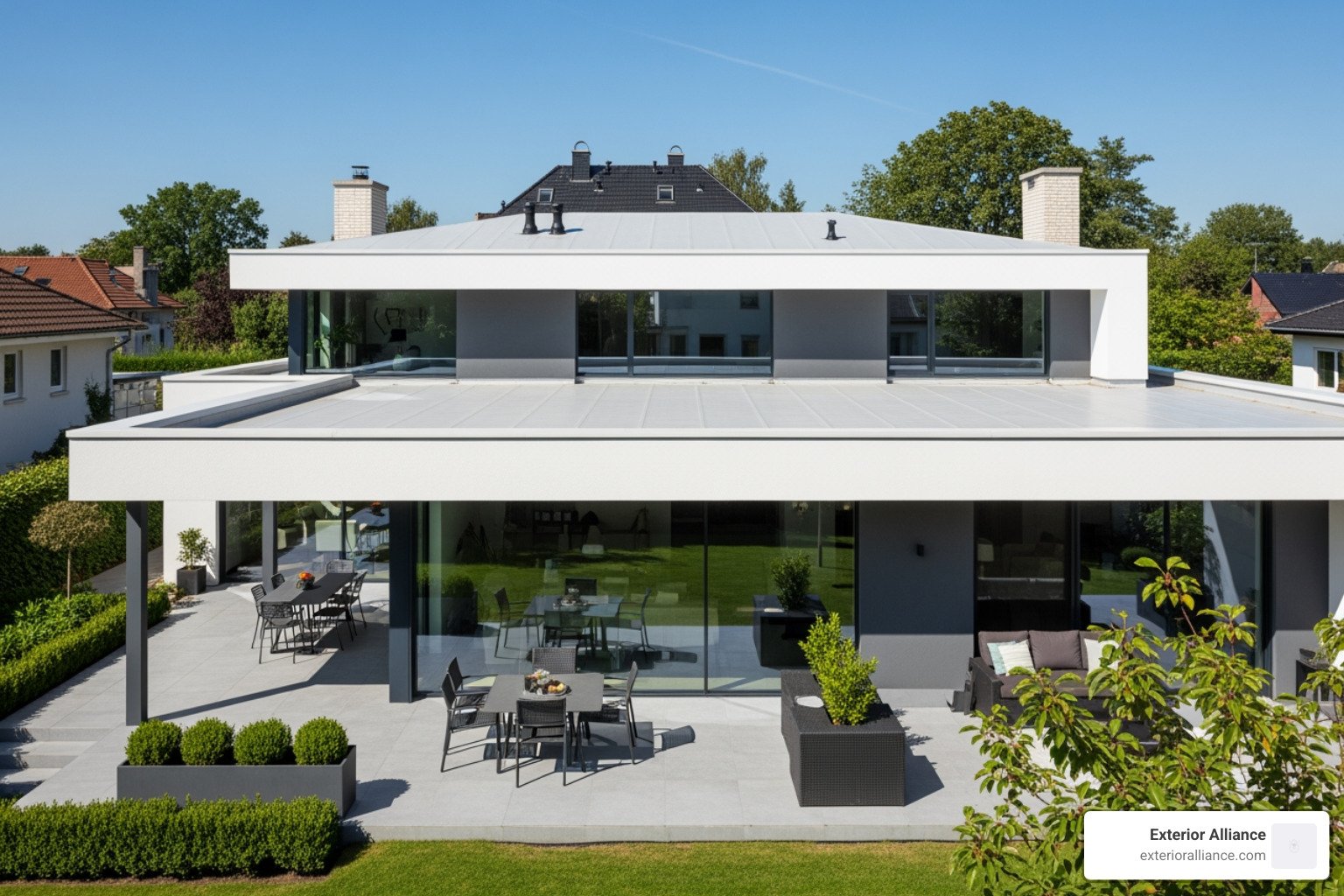
If you’re trying to figure out what is the best material for a flat roof, here’s a quick answer before we dive into the details:
| Material | Lifespan | Cost (installed) | Best For |
|---|---|---|---|
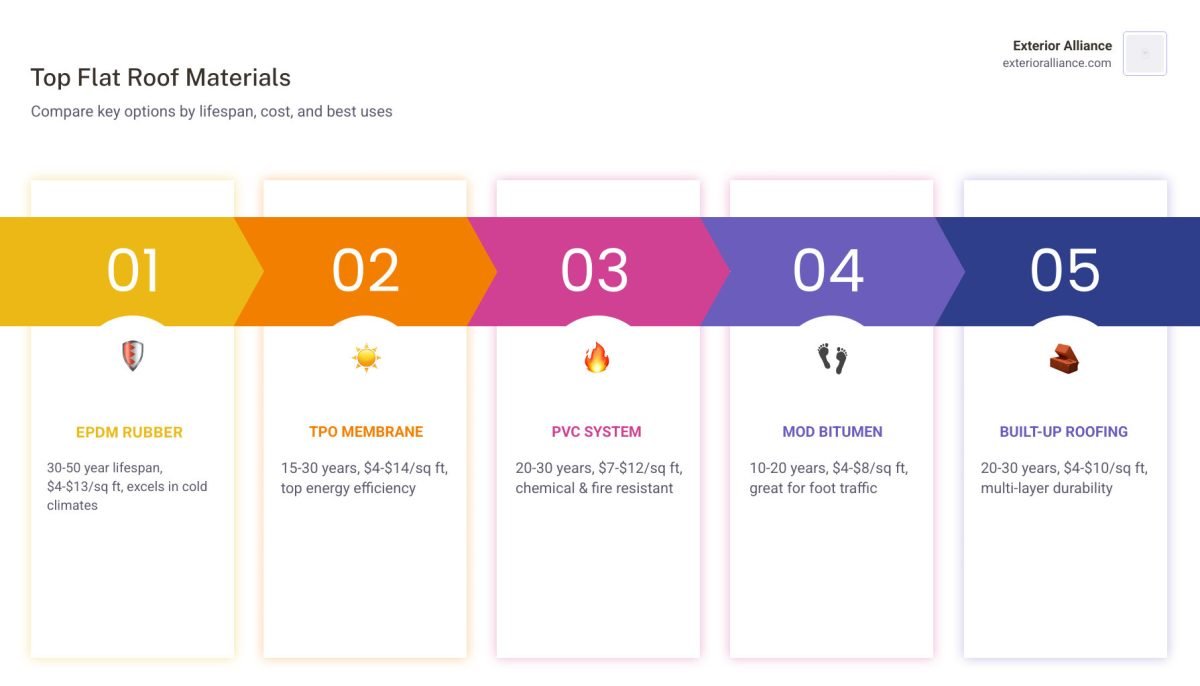
| EPDM | 30-50 years | $4-$13/sq ft | Cold climates, large roofs, budget-conscious |
| TPO | 15-30 years | $4-$14/sq ft | Energy efficiency, commercial buildings |
| PVC | 20-30 years | $7-$12/sq ft | Chemical exposure, foot traffic, fire resistance |
| Modified Bitumen | 10-20 years | $4-$8/sq ft | Foot traffic, residential flat sections |
| Built-Up Roofing (BUR) | 20-30 years | $4-$10/sq ft | Large commercial, multi-layer redundancy |
| Standing Seam Metal | 30-50 years | $8-$30/sq ft | Maximum longevity, modern aesthetics |
The short answer: There is no single best material. The right choice depends on your budget, climate, building type, and how the roof will be used.
Flat roofs aren’t truly flat. They have a slight slope — typically 1/4 to 1/2 inch per foot — to move water toward drains. Without that, water pools. And pooling water is the number one enemy of any flat roof system.
Unlike sloped roofs that shed water quickly, flat roofs need to be fully waterproof — not just water-resistant. That’s why the material you choose matters so much. A bad fit between material and conditions doesn’t just cause leaks. It shortens the life of your entire roof system.
In Central Ohio, the stakes are even higher. Columbus and Dublin homeowners deal with freeze-thaw cycles, heavy spring storms, and hot summers — a combination that tests every roofing material differently.
I’m Daniel Blanton, founder and CEO of Exterior Alliance, and over the years I’ve helped dozens of Columbus-area property owners navigate flat roof decisions after storm damage, aging systems, and failed installations. Knowing what is the best material for a flat roof for your specific situation — not just in general — is exactly what this guide is built to help you figure out.
Comparing the Most Common Flat Roofing Materials
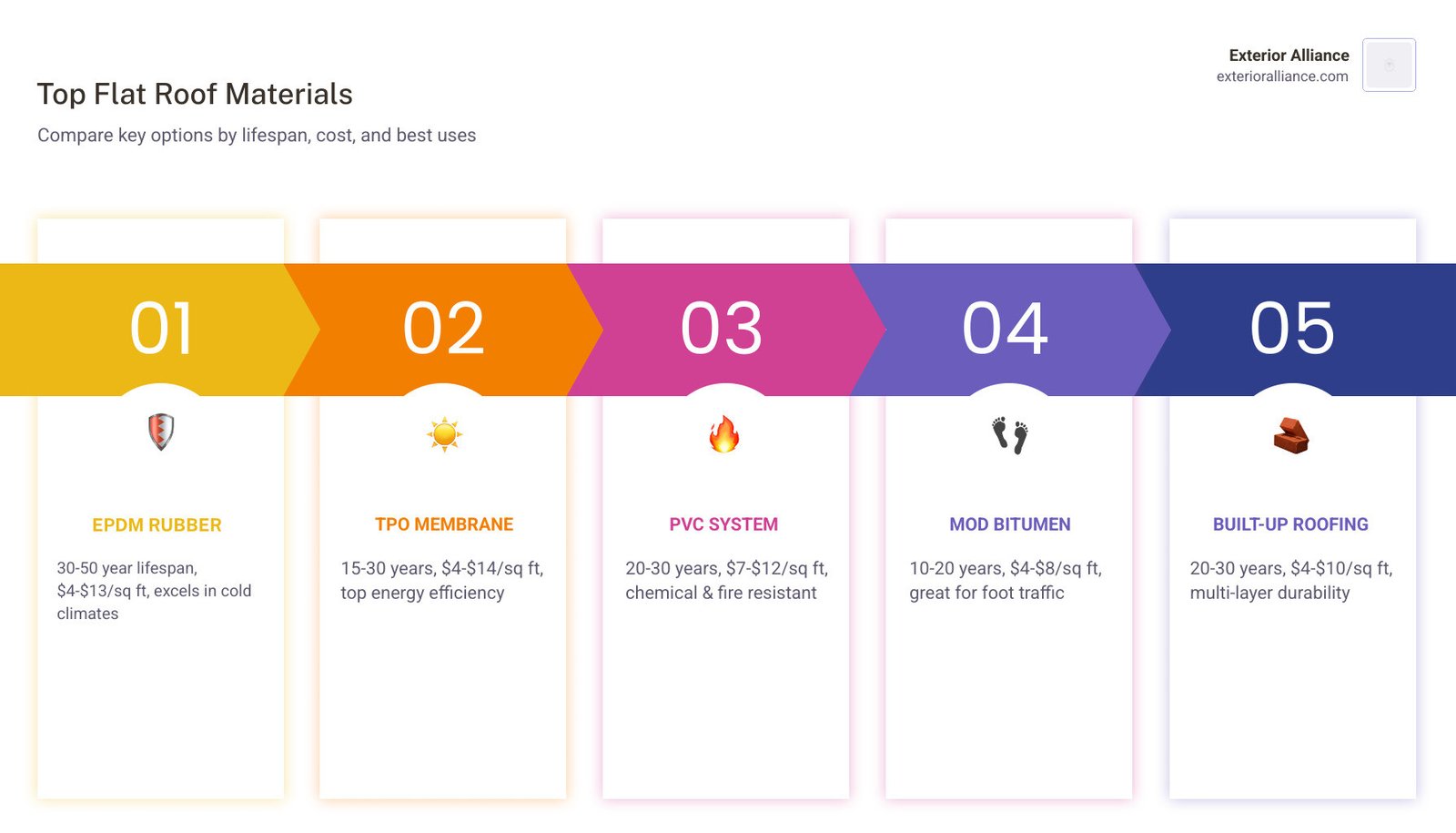
When we talk about flat roofing in 2026, we aren’t just talking about tar and gravel anymore. Modern technology has given us membranes that are lighter, stronger, and more energy-efficient than ever before. Choosing the right one requires looking at the “big three” single-ply membranes (EPDM, TPO, and PVC), traditional multi-layer systems, and high-end metal options.
Each material brings a different set of strengths to the table. For instance, Flat Roof Materials Compared: TPO, EPDM, PVC, and Modified Bitumen (2026 Guide) highlights how installation quality often dictates performance more than the material itself. If you are already seeing issues with your current setup, you might want to check out more info about commercial flat roof repair services to see if a full replacement is even necessary.
EPDM: The Durable Workhorse
EPDM (Ethylene Propylene Diene Monomer) is a synthetic rubber membrane that has been a staple in the industry since the 1960s. It’s often called “rubber roofing,” and for good reason—it’s incredibly flexible and tough.
- Lifespan: With proper maintenance, EPDM can last between 30 and 50 years.
- Climate Suitability: It is particularly excellent for Ohio winters because it remains pliable even in sub-zero temperatures.
- Color Options: While typically black (which helps melt snow in the winter), it is also available in white to help with cooling.
- Installation: It can be installed in massive seamless sheets (up to 50′ x 100′), which significantly reduces the number of seams where leaks usually start.
TPO and PVC: The Energy-Efficient Leaders
If you want to lower your utility bills, TPO and PVC are the “cool roofs” you’re looking for. These are thermoplastic membranes, meaning their seams are heat-welded together to create a permanent, watertight bond that is often stronger than the membrane itself.
- TPO (Thermoplastic Polyolefin): This is the fastest-growing segment of the market. It’s naturally reflective, which can reduce summer cooling costs by about 15-30%. It’s a great middle-ground for budget and performance.
- PVC (Polyvinyl Chloride): PVC is the premium version of TPO. It is exceptionally resistant to chemicals, grease, and fire. This makes it the go-to choice for restaurants (where grease vents can degrade other roofs) and industrial buildings.
According to the Best Flat Roof Materials: Complete Guide to Choosing the Right Roofing System, PVC’s durability and reinforced membranes make it one of the most reliable long-term investments for commercial property owners.
Traditional Systems: BUR and Modified Bitumen
Sometimes, the old ways are still around for a reason.
- Built-Up Roofing (BUR): Think of this as “roofing lasagna.” It consists of alternating layers of bitumen (tar) and reinforcing fabrics, topped with a layer of gravel. It offers incredible redundancy—if one layer is punctured, you have several more underneath it.
- Modified Bitumen: This is an evolution of BUR. It uses polymer-reinforced sheets that can be “torched down” or installed with cold adhesives. It’s like a giant, heavy-duty sticker for your roof. It is excellent for areas with heavy foot traffic, like a balcony or a rooftop service area.
What is the best material for a flat roof in Ohio?
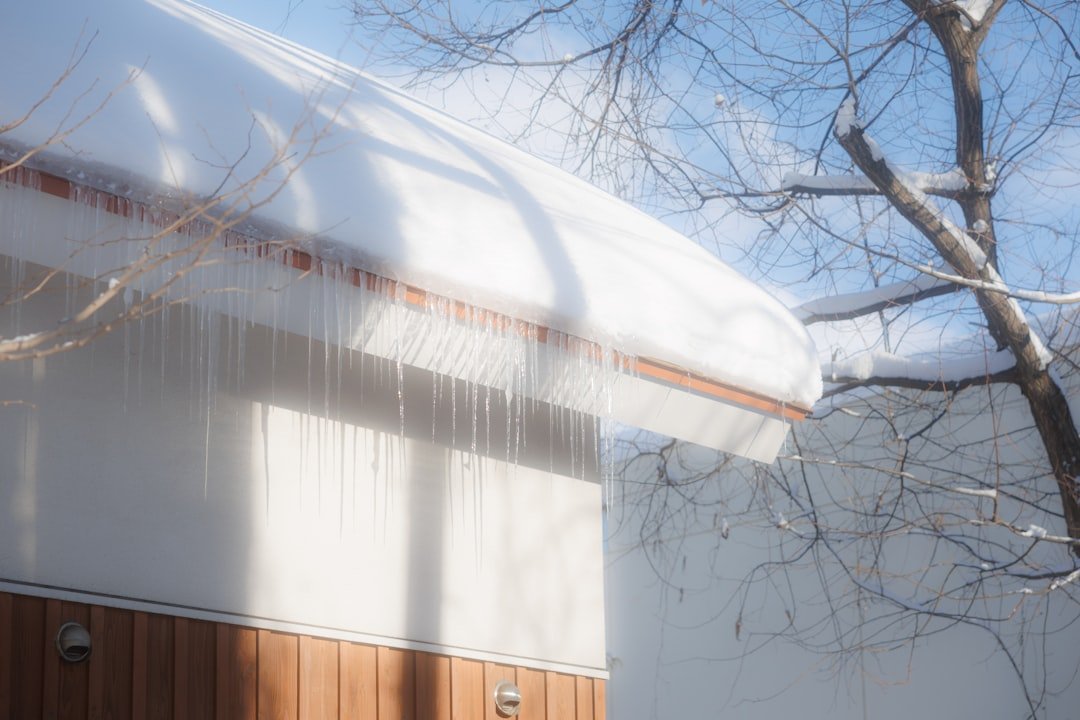
In Central Ohio, we don’t just have weather; we have variety. From the humid, 95-degree July afternoons in Columbus to the -10 degree January nights in Dublin, your roof is constantly expanding and contracting. This is known as thermal shock, and it’s why many flat roofs fail prematurely in our region.
When we evaluate what is the best material for a flat roof for a local homeowner, we have to consider the freeze-thaw cycle. Water gets into a tiny crack, freezes, expands the crack, and then thaws—leaving a bigger hole for the next rainstorm. To stay ahead of this, we always recommend keeping a Flat Roof Inspection Checklist handy.
Performance in Extreme Temperatures
- EPDM is the champion of cold weather. Because it is rubber-based, it doesn’t become brittle when it freezes.
- PVC and TPO are the champions of hot weather. Their white surfaces can reduce rooftop temperatures by up to 60°F compared to dark roofs, preventing the “urban heat island” effect in densely packed areas like Upper Arlington or Grandview Heights.
- Warm Roof Design: In Ohio, we often recommend “warm roof” construction, where the insulation is placed above the roof deck but below the membrane. This prevents condensation from forming inside your ceiling, which can lead to mold and rot.
Addressing Storm Damage and Ponding Water
Columbus is no stranger to heavy spring storms and hail. While single-ply membranes like 60-mil TPO are surprisingly hail-resistant, multi-layer systems like Modified Bitumen or BUR provide more physical “bulk” to withstand impacts.
If you notice water sitting on your roof for more than 48 hours after a rain, you have a “ponding” problem. This weight can stress the structure of your building and eventually find its way through even the smallest seam failure. If a storm hits and you notice a ceiling spot, don’t wait—check our guide on Flat Roof Emergency Repair to minimize interior damage.
Key Factors for Selecting Your Ideal Roofing System

Choosing a roof isn’t just about the weather; it’s about how you live or work under it. Here are the four pillars we use at Exterior Alliance to help our clients choose:
- Budget: Are you looking for the lowest upfront cost (Modified Bitumen/EPDM) or the lowest “cost per year” over 50 years (Standing Seam Metal)?
- Foot Traffic: Will you be walking on the roof to service HVAC units, or do you plan to build a rooftop deck? PVC and Modified Bitumen handle the “wear and tear” of boots much better than TPO.
- Aesthetics: If the roof is visible from a second-story window or the street, a sleek Standing Seam Metal roof might be the only option that adds curb appeal.
- Sustainability: Are you looking for a 100% recyclable material? Metal and PVC are high on the list, while EPDM and TPO are increasingly being recycled into new products.
What is the best material for a flat roof for energy efficiency?
If your goal is to slash your A/C bill, the answer is almost always a white, reflective membrane.
- TPO is the standard for energy efficiency. It meets most ENERGY STAR and Cool Roof Rating Council requirements.
- PVC offers similar benefits but adds better resistance to environmental pollutants.
- Reflective Coatings: If your current roof is in decent shape but just too hot, we can sometimes apply fluid-applied coatings that turn a dark, hot roof into a “cool roof” for a fraction of the cost of replacement.
What is the best material for a flat roof on a budget?
When budget is the primary concern, EPDM usually wins the race. It’s inexpensive to manufacture and, because it comes in such large sheets, it’s relatively fast to install.
However, we always tell our neighbors in Hilliard and Westerville to look at the “lifecycle value.” A Modified Bitumen roof might be cheaper today, but if it only lasts 12 years and an EPDM roof lasts 30, the EPDM roof is actually much cheaper in the long run.
Installation Methods and Long-Term Maintenance
You could buy the most expensive material in the world, but if the installation is sloppy, it will leak. In fact, industry data suggests that 80% of flat roof failures are caused by installation errors, not material defects.
There are three main ways we secure these roofs:
- Fully Adhered: The membrane is glued to the insulation or deck. This is the most wind-resistant method—perfect for the gusty storms we get in Pataskala and New Albany.
- Mechanically Fastened: The membrane is screwed into the deck using specialized plates and fasteners. This is common for TPO and PVC.
- Ballasted: The membrane is laid down and held in place by heavy stones or pavers. While cheap, this adds a lot of weight to your building.
To keep your warranty valid, you must perform regular maintenance. According to the 7 Best Flat Roof Materials For 2026: Durable Options Compared, annual inspections and clearing your drains of leaves and debris can extend the life of your roof by 5 to 10 years.
Frequently Asked Questions about Flat Roof Materials
Which flat roof material lasts the longest?
Standing Seam Metal is the king of longevity, often lasting 50 to 70 years. Among membranes, EPDM and PVC are the winners, frequently reaching the 30-year mark when installed correctly and maintained.
Can I install a flat roof myself?
We strongly advise against it. Flat roofing requires specialized tools (like hot-air welders that cost thousands of dollars) and precise detailing around vents and edges. A DIY mistake on a flat roof doesn’t just look bad—it can lead to structural rot that costs tens of thousands to fix. Plus, most manufacturers will only honor a warranty if the roof is installed by a certified contractor.
How much does a flat roof replacement cost in 2026?
Most residential flat roof replacements in the Columbus area range from $4,000 to $19,000. On a per-square-foot basis, you can expect to pay anywhere from $4 to $14 for standard membranes, while premium metal options can go much higher. Factors like the removal of old layers and the condition of the wood deck underneath will impact your final quote.
Conclusion
At Exterior Alliance, we know that your roof is the only thing standing between your family (or your business) and the unpredictable Ohio weather. Whether you’re in Dublin, Bexley, or downtown Columbus, choosing what is the best material for a flat roof is a big decision that shouldn’t be made in a vacuum.
We are a locally-owned, BBB A+-rated company specializing in insurance storm restoration. We are bonded, insured, and deeply committed to excellence in every seam we weld and every sheet we lay. We don’t just want to sell you a roof; we want to provide the protection and peace of mind you deserve.
Ready to see how a professional flat roof installation looks in the real world? View our flat roof project case study to see our work in action. If you’re ready for a consultation, give us a call today—we’d love to help you protect your home for the next 30 years and beyond.
