
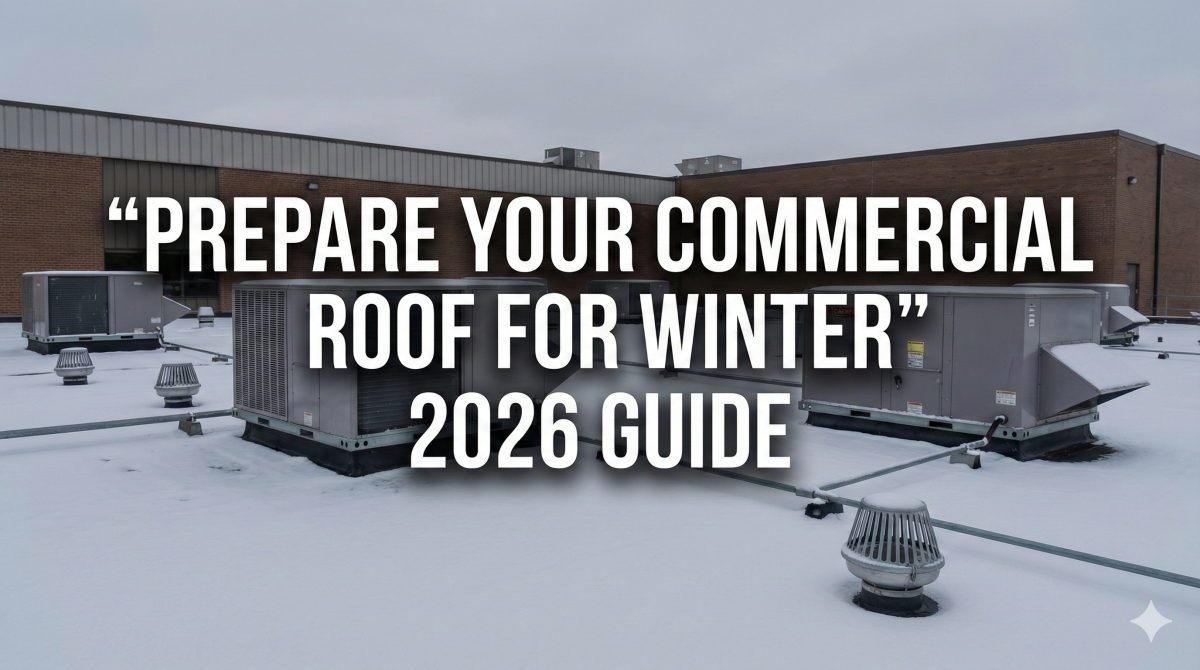
Commercial roofing winter preparation is more important than ever heading into 2026. With increasingly unpredictable winter weather, heavier snowfall, and more aggressive freeze–thaw cycles, proactive preparation is no longer optional for commercial property owners—it’s essential.
Taking action before winter fully sets in helps protect your commercial roof, avoid emergency repairs, reduce long-term maintenance costs, and improve your building’s overall energy efficiency.
Here’s a quick checklist every commercial property owner should complete before winter:
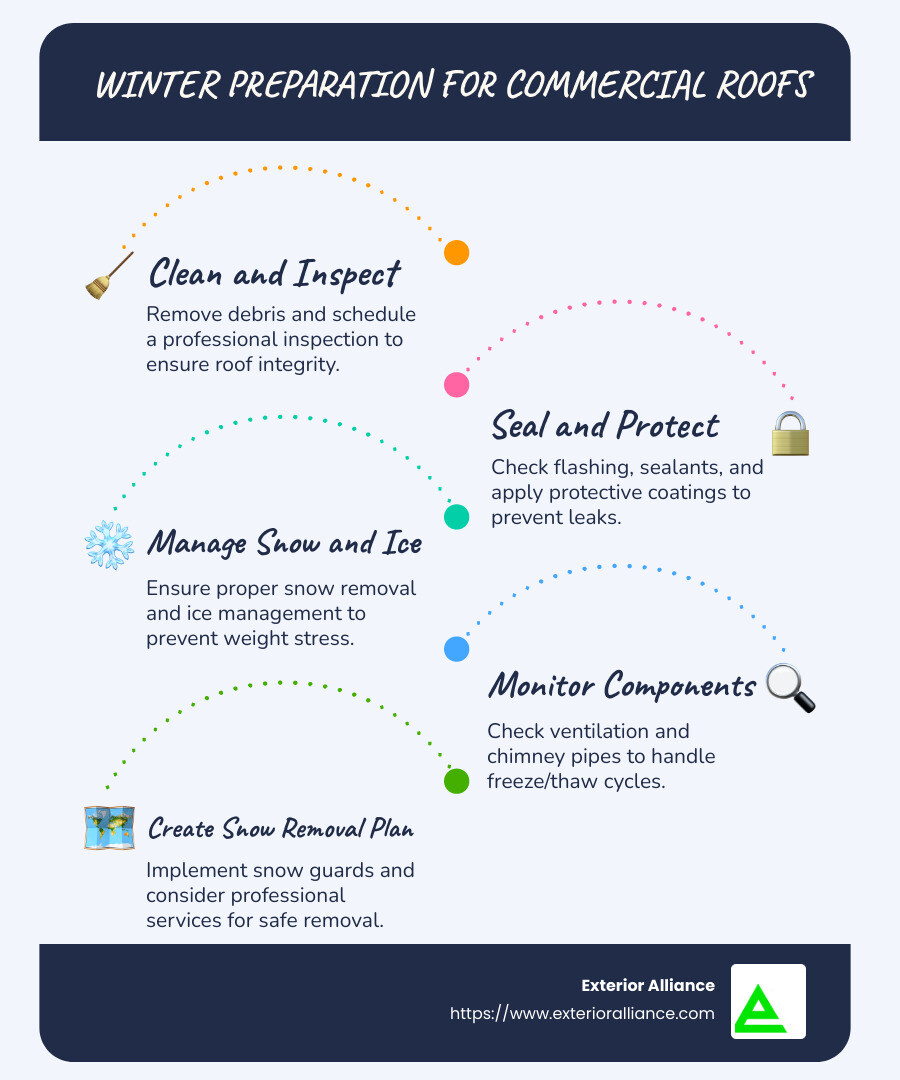
- Clean and Inspect Your Roof: Remove debris and schedule a professional inspection.
- Seal and Protect: Check flashing, sealants, and apply protective coatings.
- Manage Accumulation: Plan for proper snow and ice removal and maintain drainage systems.
Winter conditions can wreak havoc on commercial roofs through heavy snow loads, ice accumulation, and prolonged freezing temperatures. Repeated freeze–thaw cycles often lead to cracks, membrane damage, leaks, and ice dams—all of which compromise roof integrity if left unaddressed.
By preparing your commercial roof before winter arrives, you extend its lifespan, reduce risk, and ensure your building is ready for the harsh months ahead.
Clean and Inspect Your Roof
This is the most critical step in commercial roofing winter preparation, as it allows issues to be identified and corrected before cold temperatures make repairs more difficult—or impossible.
Before winter arrives, cleaning and inspecting your commercial roof gives it a clean slate before snow and ice take hold.
Debris Removal
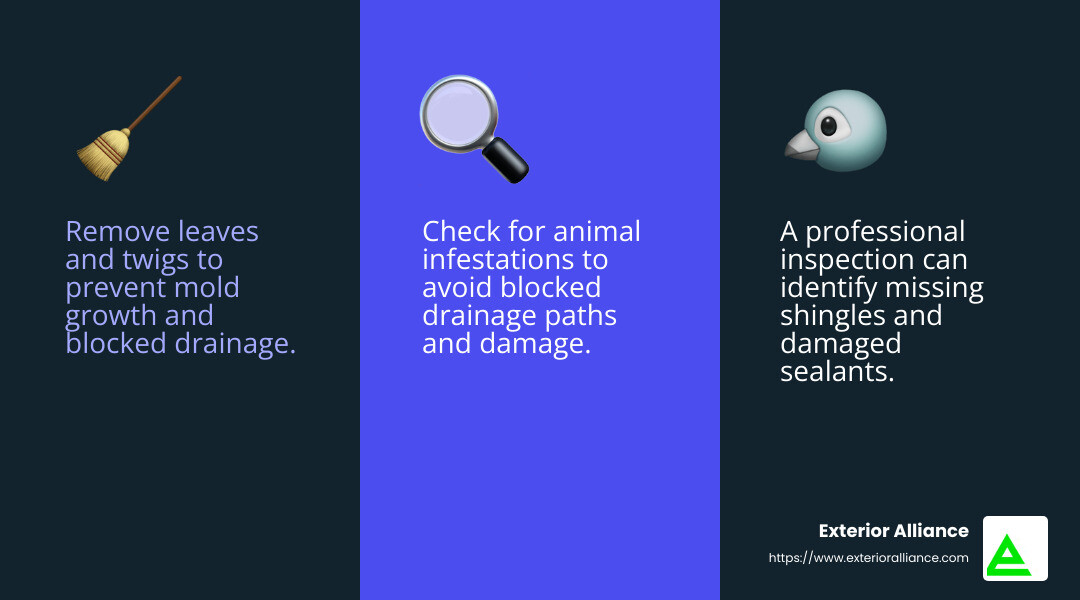
Leaves, twigs, dirt, and other debris trap moisture and block drainage systems. As temperatures drop, trapped moisture freezes and expands, accelerating roof deterioration. Clearing debris reduces the risk of mold growth, standing water, and hidden leaks.
If roof access is unsafe or difficult, professional cleaning is strongly recommended.
Professional Inspection
Once the roof is clean, schedule a professional inspection. A commercial roofing contractor will examine:
- Roofing membranes or shingles
- Flashing around vents, skylights, and penetrations
- Sealants and seams
- Early signs of structural stress or water intrusion
Small issues discovered early can prevent major winter failures once snow begins melting and refreezing.
Animal Infestation
Cold weather drives animals to seek shelter. Squirrels, birds, and other wildlife may nest on commercial roofs, blocking drains and damaging materials. A professional inspection helps identify nesting activity and recommend preventative solutions such as sealing entry points or trimming nearby trees.
Taking these steps early dramatically reduces the risk of winter leaks, ice dams, and unexpected emergency repairs.
Taking these steps now can save you a lot of trouble later. A clean and well-inspected roof is less likely to suffer from winter woes like leaks and ice dams. Plus, you’ll have peace of mind knowing your building is ready to weather the storm.
Next up, let’s talk about how to seal and protect your roof to keep the cold out and the warmth in.
Seal and Protect Your Roof
Once your roof has been cleaned and inspected, the next step is to seal and protect it against moisture intrusion and temperature fluctuations.
Flashing
Flashing protects roof edges and penetrations such as chimneys, vents, and skylights. Over time, flashing can loosen, corrode, or separate. Addressing flashing issues is one of the most effective forms of roof leak prevention before winter weather arrives.
Sealants
Sealants protect joints and seams from moisture. Cold temperatures cause aging sealants to shrink and crack, allowing water infiltration. Inspect sealants carefully and reapply compatible materials where needed to maintain a watertight barrier.
Protective Coating
Applying a protective roof coating adds a durable barrier against moisture, UV exposure, and thermal movement. Coatings also improve reflectivity, which can stabilize indoor temperatures and reduce heating costs. Flat and low-slope roofs benefit most from this added protection.
A well-sealed roof performs better during winter and reduces long-term maintenance expenses.
Manage Snow and Ice Accumulation
Snow and ice accumulation place significant stress on commercial roofing systems. Managing buildup properly protects both the roof structure and interior spaces.
Snow Removal
Heavy snow adds weight that can strain roof systems and increase collapse risk. Scheduled snow removal—performed by trained professionals—helps maintain safe load levels without damaging roofing materials.
Ice Dams
Ice dams form when melting snow refreezes near roof edges, trapping water behind it. This trapped moisture can penetrate roofing systems and cause interior leaks. Learning about ice dam prevention for commercial roofs helps reduce long-term winter damage.
Drainage Systems
Blocked drains, gutters, and downspouts prevent proper water flow. Standing water freezes, expands, and accelerates roof damage—leading to more severe winter roof damage if left unaddressed.
Monitor and Maintain Roof Components
Winter affects more than just the roof surface—key components must also be monitored throughout the season.
Ventilation
Proper ventilation prevents uneven snow melting and moisture buildup that contribute to ice dams. Regular inspections ensure airflow remains balanced and unobstructed.
Chimney Pipes and Roof Penetrations
Snow-blocked vents and chimney pipes can create dangerous conditions, including moisture accumulation and carbon monoxide buildup. Ensure all penetrations remain clear and properly sealed above expected snow levels.
Freeze–Thaw Cycles
Repeated freeze–thaw cycles cause roofing materials to expand and contract, leading to cracks, seam failures, and long-term deterioration. Transition areas where materials meet should be inspected closely throughout winter.
Create a Snow Removal Plan
Waiting until the first major storm is a costly mistake. A documented snow removal plan protects your roof, building occupants, and pedestrians below.
Snow Guards
Snow guards prevent large sheets of snow from sliding off roofs, protecting gutters and reducing safety hazards.
Wind Baffles
Wind baffles help redirect wind patterns and minimize uneven snow accumulation—particularly useful in high-wind regions.
Professional Services
Professional snow removal and commercial roof maintenance services ensure snow and ice are removed safely without damaging roofing materials while identifying early warning signs of roof failure.
Frequently Asked Questions About Commercial Roofing Winter Preparation
When should commercial roof winter preparation begin?
Ideally, preparation should begin in early fall—before overnight freezing temperatures occur. This allows inspections, repairs, and coatings to be completed under proper conditions.
Why is snow and ice removal important?
Snow and ice add excessive weight, block drainage systems, and increase the risk of leaks or structural damage. Regular removal keeps your roof safe and functional throughout winter.
What are ice dams and their impact?
Ice dams trap water beneath roofing materials, allowing moisture to penetrate insulation, ceilings, and walls—often resulting in costly interior damage.
How do freeze–thaw cycles affect roofs?
Constant expansion and contraction weaken roofing materials over time, leading to cracks and leaks. Routine inspections help prevent long-term damage.
Conclusion
Winter can be unforgiving for commercial roofing systems—especially heading into 2026. At Exterior Alliance, we focus on proactive prevention rather than emergency repairs.
Our BBB-accredited team (A+ rating) specializes in residential and commercial roofing, offering inspections, sealing, snow management, and long-term maintenance solutions.
Don’t wait for winter storms to expose hidden roofing issues. Contact Exterior Alliance today to schedule a commercial winter roof inspection and protect your property before winter arrives.
Peace of mind starts with preparation—let us handle your winter roofing needs so you can run your business with confidence.
