
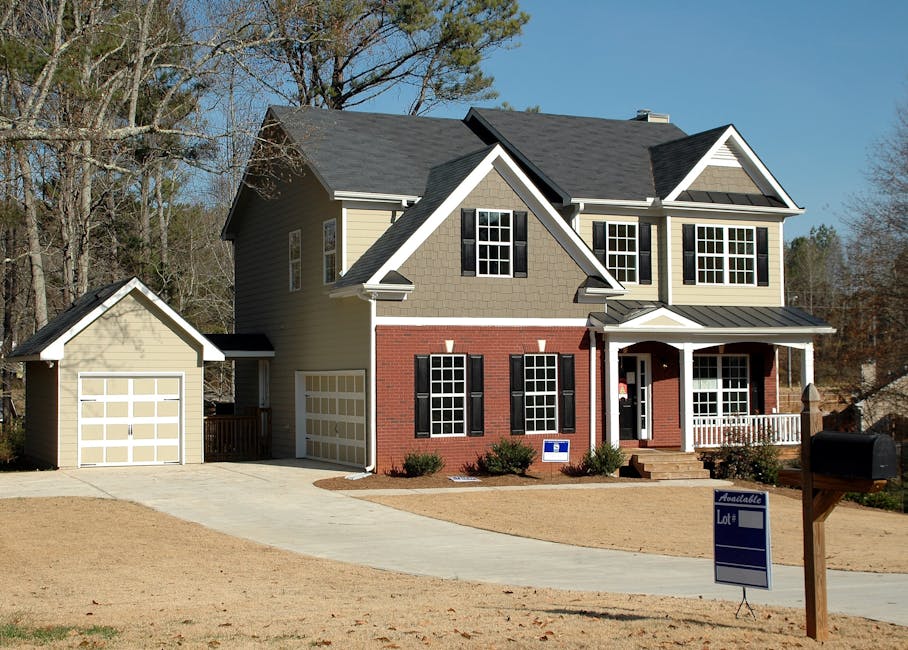
James Hardie siding installation cost is one of the first things Ohio homeowners want to understand before replacing their exterior. James Hardie is a premium siding product, so it normally costs more upfront than standard vinyl siding. However, its durability, appearance, fire resistance, and lower maintenance requirements can make it a smart long-term investment.
For early budgeting, many professionally installed James Hardie siding projects in 2026 fall between $10 and $22 or more per square foot. The final price depends on the amount of siding your home needs, the selected James Hardie product, removal of the existing siding, wall repairs, trim, finishing details, and installation complexity.
This range should only be used as a planning estimate. Every house is different. An accurate price requires an exterior inspection and detailed measurements.
Exterior Alliance provides professional James Hardie siding installation in Columbus, Ohio and surrounding Central Ohio communities. Our team can inspect your current exterior, explain your options, and prepare an estimate based on the actual condition and design of your home.
Quick Overview: What Goes Into James Hardie Siding Installation Cost
The total cost of a James Hardie siding project can include:
- Siding materials: The selected profile, finish, trim package, flashing, weather barrier, fasteners, and accessories.
- Installation labor: The time and skill required to prepare and install the siding correctly.
- Existing siding removal: Labor, hauling, and disposal of old siding materials.
- Wall preparation: Repairs to damaged sheathing or other materials behind the existing siding.
- Finishing details: Window trim, door trim, corners, soffits, fascia, decorative accents, and painting when required.
- Permits: Local permit requirements may affect the price in some Central Ohio communities.
- Unexpected conditions: Hidden moisture damage, deteriorated wood, or improperly installed materials discovered after removal.
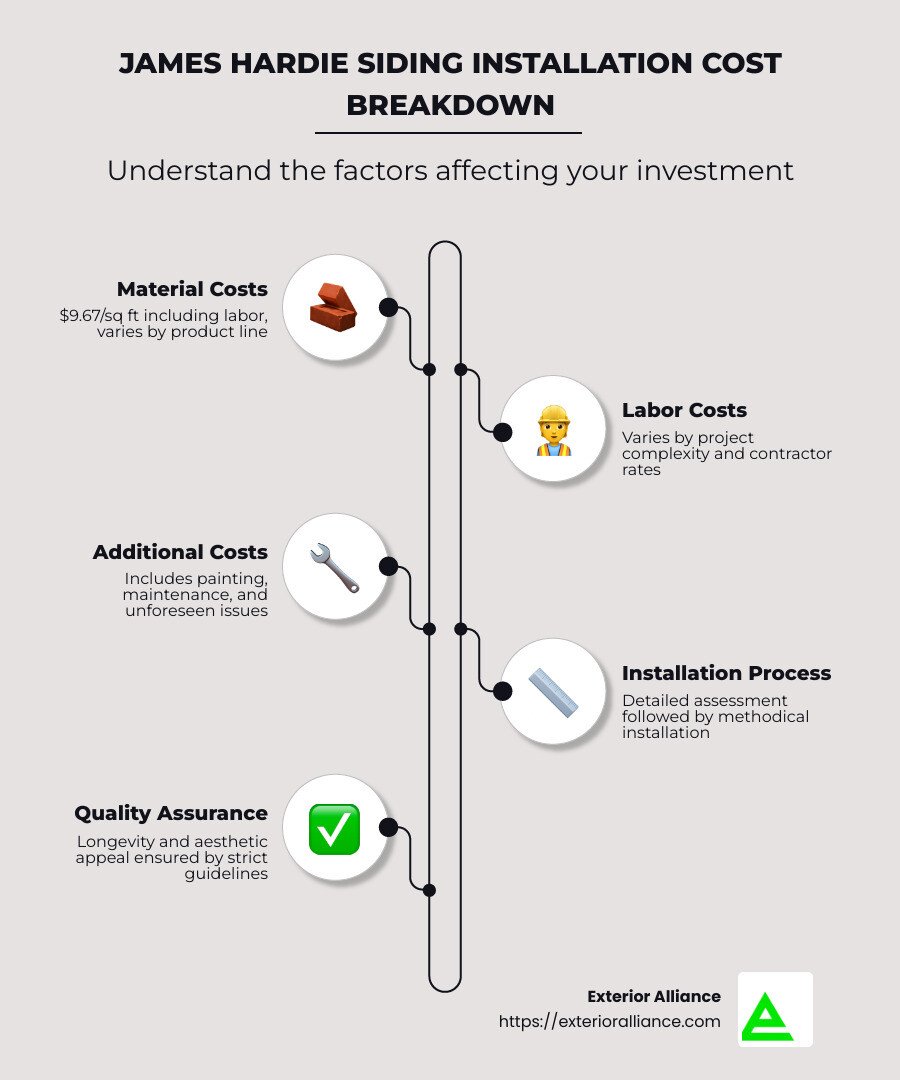
The main factors affecting a James Hardie siding estimate include materials, labor, removal, preparation, and installation quality.
What Is James Hardie Siding?
James Hardie siding is a fiber cement siding product made from cement, sand, water, and cellulose fibers. This composition creates a strong exterior material designed to withstand weather, moisture, pests, and changing temperatures.
James Hardie offers several siding styles, including traditional lap siding, vertical panels, and shingle-style products. Homeowners can use one profile throughout the entire exterior or combine multiple profiles to create more architectural detail.
Popular James Hardie products include:
- HardiePlank lap siding
- HardiePanel vertical siding
- HardieShingle siding
- HardieTrim boards
- ColorPlus factory-applied finishes
Homeowners who prefer a more traditional appearance can explore James Hardie shingle siding. Those interested in a modern or board-and-batten design can learn more about James Hardie siding panels.
Why Ohio Homeowners Choose James Hardie Siding
Ohio homes face summer heat, freezing winter temperatures, heavy rain, strong winds, hail, and repeated freeze-thaw cycles. These conditions can be difficult on lower-quality exterior materials.
James Hardie siding is popular throughout Central Ohio because it offers several practical advantages.
Durability
Fiber cement does not rot or warp like untreated wood. It is also less likely to become distorted from temperature changes than some lower-grade siding products.
Correct installation still matters. Flashing, clearances, fastening, moisture management, and joint placement must follow the manufacturer’s requirements. Even a premium siding product can develop problems when installed incorrectly.
Fire Resistance
James Hardie fiber cement siding is a noncombustible building material. It will not ignite when exposed to a direct flame and does not contribute fuel to a fire.
This does not make a house fireproof, but it provides an advantage over combustible exterior materials such as untreated wood siding.
Resistance to Pests and Moisture
Fiber cement is not an attractive food source for termites and other wood-damaging pests. It also resists moisture-related deterioration when installed and maintained correctly.
Impact and Weather Resistance
James Hardie siding is designed to withstand demanding weather conditions. Its strength makes it a practical option for Ohio homes exposed to wind, hail, rain, snow, and temperature changes.
No siding product is completely damage-proof. Severe storms can still cause damage, so homeowners should inspect their siding after major weather events.
Design Options
James Hardie siding is available in multiple profiles, textures, and colors. Homeowners can create an exterior that looks traditional, modern, farmhouse-inspired, or completely custom.
If you are still comparing materials, read our guide to choosing the best home siding for Ohio.
ColorPlus Technology
ColorPlus Technology is James Hardie’s factory-applied finish. Multiple coats are applied in a controlled environment and cured onto the siding.
The finish is designed to resist peeling, cracking, and chipping. James Hardie states that qualifying ColorPlus finishes include a 15-year limited warranty. Qualifying siding products also include a 30-year non-prorated limited substrate warranty.
Homeowners should review the current written warranty, installation requirements, and maintenance instructions for their selected products.
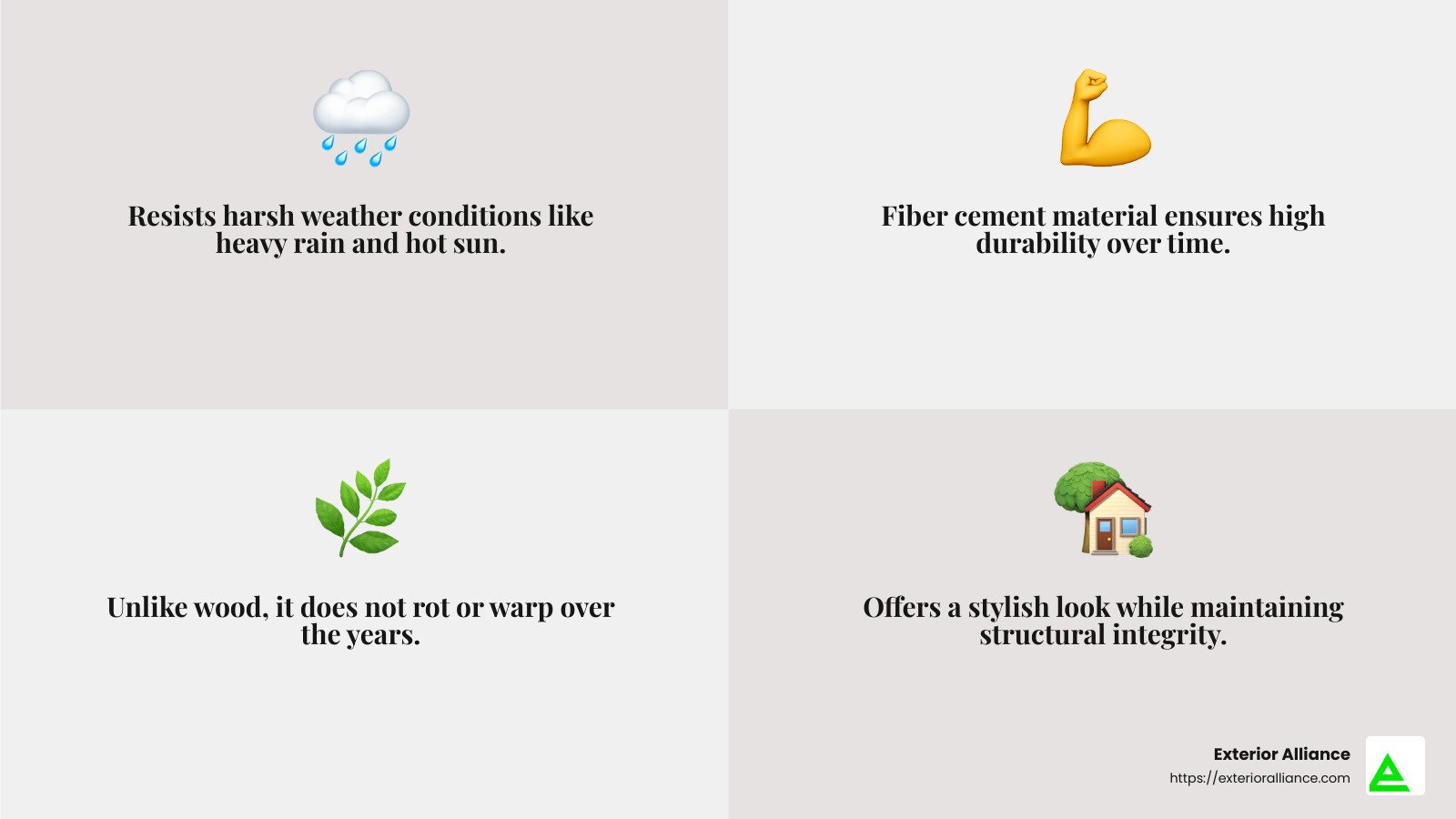
James Hardie siding provides durability, design flexibility, fire resistance, and protection against common exterior threats.
How Much Does James Hardie Siding Installation Cost Per Square Foot?
A reasonable planning range for professionally installed James Hardie siding in 2026 is approximately $10 to $22 or more per square foot.
Straightforward installations may fall toward the lower end. Detailed or complex homes can exceed the upper end.
The installed price may include:
- James Hardie siding materials
- Standard installation labor
- Fasteners and basic accessories
- Flashing and moisture-management materials
- Standard trim
- Jobsite cleanup
It may not include extensive sheathing repairs, major structural work, premium decorative details, specialty equipment, or unusually difficult removal conditions.
The only reliable way to price the project is to measure the exterior walls and inspect what is behind the existing siding.
House Size Versus Siding Square Footage
A common mistake is estimating James Hardie siding installation cost from a home’s interior floor area.
A 2,000-square-foot house does not automatically have 2,000 square feet of siding. A two-story home may have more exterior wall area than a wider one-story home with the same interior square footage.
Windows, doors, garages, gables, dormers, additions, and architectural details also affect the measurement.
Contractors calculate siding area using the home’s exterior elevations. They then account for openings, waste, cuts, trim, and project-specific details.
Because of this, online estimates for a “2,000-square-foot house” should only be treated as rough examples.
What Affects James Hardie Siding Installation Costs?
1. The Amount of Siding Required
Larger homes generally require more materials and labor. However, exterior wall area matters more than interior floor area.
A contractor will measure each exterior elevation and calculate the amount of siding, trim, flashing, and related materials needed.
2. The Selected James Hardie Product
Standard HardiePlank lap siding is often more economical to install than detailed shingle patterns or custom combinations.
Vertical panels, board-and-batten designs, decorative bands, and mixed-profile exteriors can require additional materials, cutting, layout work, and labor.
3. ColorPlus Versus Field Painting
ColorPlus siding arrives with a factory-applied finish. Primed James Hardie products must be painted after installation.
The right option depends on your preferred color, design goals, budget, and long-term maintenance plans. Field painting can provide greater color flexibility, while ColorPlus offers a consistent factory finish.
4. Removal of Existing Siding
Removing old siding adds labor, disposal, and hauling costs. The price depends on the existing material, the number of layers, the height of the house, and how easily the siding can be removed.
Installing new siding directly over damaged or poorly prepared materials can hide serious problems. Removal gives the contractor an opportunity to inspect the wall system before installing the new exterior.
5. Sheathing and Wall Repairs
After the old siding is removed, contractors may discover damaged sheathing, moisture intrusion, deteriorated framing, or improperly installed materials.
These conditions cannot always be seen during the initial inspection. Repairs add to the project price, but ignoring them can compromise the new siding system.
6. Weather-Resistant Barrier and Flashing
A properly installed weather-resistant barrier helps manage water that gets behind the siding. Flashing is also needed around windows, doors, roof intersections, and other openings.
These components are critical because siding is not the home’s only defense against moisture.
7. Trim and Architectural Details
Trim is installed around windows, doors, corners, rooflines, and other transitions. Wide trim, decorative bands, columns, gables, and custom accents increase material and labor costs.
Trim choices can also make a major difference in the finished appearance of the home.
8. Height and Accessibility
Two-story and three-story homes normally require more setup, safety equipment, staging, and installation time.
Tight property lines, landscaping, slopes, patios, additions, and limited access can also affect labor requirements.
9. Installation Quality
James Hardie siding requires specific installation procedures. Proper clearances, flashing, fastening, joint placement, and moisture management are necessary for long-term performance and warranty protection.
Hiring the cheapest installer can become expensive if the siding must later be repaired or replaced. Before hiring anyone, review what to look for in a qualified James Hardie siding contractor.
Example James Hardie Siding Project Budgets
The following ranges are broad planning examples, not guaranteed quotes:
- Smaller or straightforward exterior: Approximately $15,000 to $25,000
- Average full-home replacement: Approximately $25,000 to $45,000
- Large or architecturally complex home: Approximately $45,000 to $70,000 or more
A smaller home with extensive repairs can cost more than a larger home with simple exterior walls. Product selection and installation complexity often affect the price as much as size.
For an accurate number, schedule an inspection and request an itemized estimate.
James Hardie Siding Compared With Vinyl Siding
Vinyl siding usually costs less upfront. It is lightweight, widely available, and relatively quick to install.
James Hardie siding generally provides:
- A thicker and more substantial appearance
- Better resistance to fire
- Strong resistance to pests and rot
- Less risk of warping from heat
- A broad selection of architectural profiles
- Long manufacturer warranty options
Vinyl may be the right choice when the lowest initial price is the main priority. James Hardie may be a better fit when durability, appearance, and long-term exterior performance matter more.
Homeowners comparing available options can review Exterior Alliance’s complete siding installation services in Columbus.
James Hardie Siding Compared With Wood Siding
Wood siding provides a natural appearance that many homeowners love. However, it requires regular maintenance and can be vulnerable to rot, insects, moisture, and fire.
James Hardie siding can recreate the appearance of painted wood without many of the same maintenance demands. It still requires cleaning, inspection, caulk maintenance, and occasional finish work, but it does not require the same level of protection as natural wood.
You can also review Exterior Alliance’s information about wood siding for homes before making a final decision.
Is James Hardie Siding Worth the Cost?
James Hardie siding can be worth the cost for homeowners who plan to remain in their home, want a premium exterior appearance, or are tired of repairing and maintaining older siding.
Its potential advantages include:
- Long service life when properly installed
- Strong resistance to Ohio weather
- Lower maintenance than natural wood
- Improved curb appeal
- Multiple styles and colors
- Manufacturer warranty protection
- Resistance to pests, rot, and fire
The value depends heavily on installation quality. Proper preparation and moisture management matter just as much as the siding itself.
How to Get an Accurate James Hardie Siding Installation Estimate
A useful estimate should clearly explain:
- The measured siding area
- The specific James Hardie product and profile
- The selected finish and color
- Removal and disposal of existing siding
- Weather barrier and flashing work
- Trim around windows, doors, and corners
- Known wall or sheathing repairs
- Painting, if applicable
- Cleanup and final inspection
- Warranty information
- How unexpected damage will be handled
Avoid comparing estimates based only on the final number. One contractor may include removal, trim, moisture protection, and cleanup while another leaves those items out.
If your current exterior is damaged or nearing the end of its useful life, review Exterior Alliance’s siding replacement services in Columbus.
Frequently Asked Questions About James Hardie Siding Installation Cost
How much does labor cost for James Hardie siding?
Labor is built into most full-project estimates. The amount varies based on the home’s height, layout, accessibility, selected profile, trim details, removal requirements, and local labor conditions.
Separating labor into one universal square-foot price can be misleading because a simple one-story wall and a detailed three-story elevation require very different amounts of work.
How much does James Hardie siding cost on a 2,000-square-foot house?
Interior floor area does not determine siding area. A 2,000-square-foot home could require significantly more or less siding depending on the number of stories, wall dimensions, attached garages, gables, windows, and architectural details.
A full replacement might fall between $20,000 and $45,000 or more, but the exterior must be measured before an accurate estimate can be provided.
Does old siding need to be removed?
Not every project is identical, but removing the old siding is often the best way to inspect the sheathing and wall system. Covering damaged materials can trap moisture or hide deterioration.
The contractor should inspect the existing exterior and explain whether removal is necessary.
Does James Hardie siding require maintenance?
Yes, but it is generally considered low maintenance. Homeowners should periodically clean the siding, inspect caulked joints, keep gutters functioning, maintain proper clearance from soil and landscaping, and address damaged finish areas.
Follow the manufacturer’s current care and maintenance instructions for your specific product.
Can James Hardie siding be installed during an Ohio winter?
Installation may be possible during colder months, but weather conditions can affect scheduling, sealants, painting, and jobsite safety.
Your contractor should determine whether current conditions meet the requirements for the siding, paint, sealants, and other installation materials.
Does homeowners insurance cover siding replacement?
Insurance may cover siding damage caused by a covered event such as wind or hail. It generally does not cover normal wear, age, poor maintenance, or installation defects.
Coverage depends on the policy and cause of damage. Homeowners should document the damage and speak with their insurance carrier before assuming the project will be covered.
How long does James Hardie siding installation take?
Many full-home projects take approximately one to three weeks. Larger homes, detailed designs, extensive repairs, bad weather, and custom painting can extend the timeline.
Your contractor should provide a projected schedule before work begins.
Get a James Hardie Siding Estimate in Central Ohio
James Hardie siding installation cost depends on much more than the price of the boards. A complete project may include removal, sheathing repairs, moisture protection, flashing, trim, painting, installation, cleanup, and warranty-compliant workmanship.
Exterior Alliance installs James Hardie siding for homeowners throughout Columbus, Dublin, Hilliard, Westerville, New Albany, Upper Arlington, Delaware, and surrounding Central Ohio communities.
Our team will inspect your exterior, discuss the available profiles and colors, measure the home, and provide a project-specific estimate.
Contact Exterior Alliance or call 844-GO-ROOF-1 to schedule your James Hardie siding consultation.
James Hardie Siding Service Areas in Central Ohio
Exterior Alliance installs James Hardie siding throughout Columbus and the surrounding Central Ohio communities. Explore local siding services in your area:
- James Hardie siding in Columbus, Ohio
- James Hardie siding in Dublin, Ohio
- James Hardie siding in Hilliard, Ohio
- James Hardie siding in Westerville, Ohio
- James Hardie siding in Upper Arlington, Ohio
- James Hardie siding in New Albany, Ohio
Homeowners outside these communities can view all James Hardie siding service areas or contact Exterior Alliance to confirm availability.
