
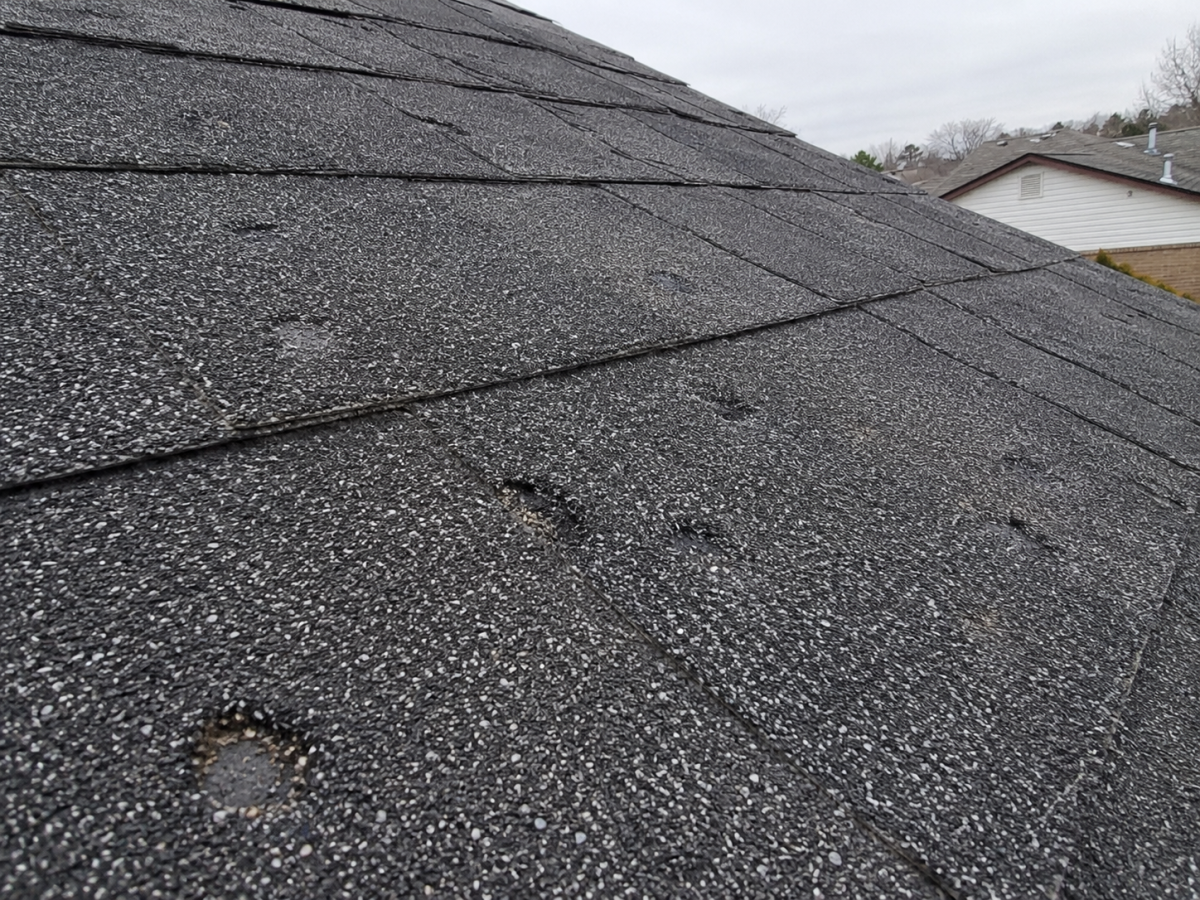
Central Ohio gets hit by hail more often than most homeowners realize. Franklin County alone averages multiple significant hailstorms per year, and the damage they leave behind isn’t always obvious from the driveway. A roof can take dozens of hits from quarter-sized hailstones and look perfectly fine from the ground — until granule loss, bruised shingles, and compromised seals start causing leaks six months later.
The difference between catching hail damage early and discovering it after water stains appear on your ceiling is thousands of dollars. This guide covers exactly what hail damage looks like on different roofing materials, how to safely inspect your roof from the ground, how to tell hail damage apart from normal wear, and how to document everything for an insurance claim. If you’ve had a recent storm roll through Columbus, Dublin, Westerville, or anywhere in Central Ohio — this is where to start.
What Does Hail Damage Look Like on a Roof?
Hail damage creates specific, identifiable marks on roofing materials. The key characteristics that separate hail damage from normal aging or wear are randomness, concave shape, and granule displacement.
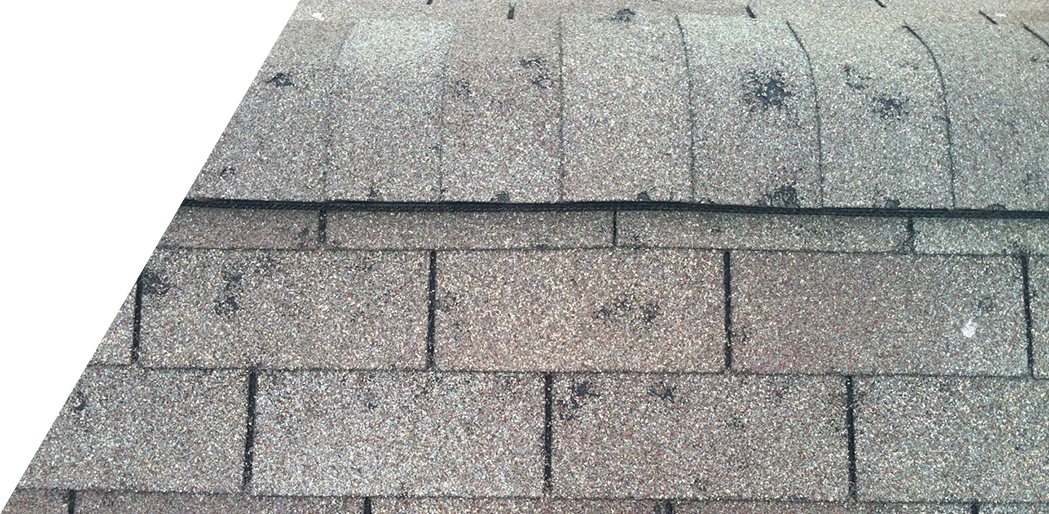
On asphalt shingles — the most common roofing material in Columbus — hail damage shows up as:
- Black divots or bruises: Round, dark spots where granules have been knocked clean off the shingle surface. These spots feel rough compared to surrounding areas.
- Exposed fiberglass mat: When granule loss is severe, you can see the white or black mat underneath — the shingle’s structural layer. Once UV rays hit exposed mat, deterioration accelerates rapidly.
- Soft or spongy spots: Press gently on a suspect area. If it feels soft compared to adjacent shingles, the underlying mat has been bruised by impact. This is the most reliable indicator of functional hail damage.
- Cracked or split shingles: Larger hailstones can fracture shingles outright, creating visible cracks that become direct water entry points.
- Damaged self-seal strips: The adhesive strip that holds shingle tabs down can be broken by impact. Once the seal fails, shingles lift in wind and blow off in future storms.
The pattern matters as much as the marks themselves. Hail damage is randomly distributed across the roof — not in lines, clusters, or patterns. If damage follows a regular pattern, it’s more likely mechanical (foot traffic, ladder marks) or a manufacturing defect.
Ground-Level Inspection: How to Check Without Climbing
You don’t need to get on your roof to find strong evidence of hail damage. In fact, you shouldn’t — wet or damaged roofs are dangerous, and walking on compromised shingles can make the damage worse. Start from the ground and work systematically around the property.
Check Collateral Damage First
Your roof isn’t the only thing hail hits. These ground-level indicators confirm that hailstones were large enough and moving fast enough to cause roof damage:
- Dented gutters and downspouts: Aluminum gutters dent easily. Random round dings along gutter runs are the single best ground-level indicator of roof damage.
- Siding marks: Vinyl siding shows white stress lines or small cracks. Wood siding shows fresh gouges. Fiber cement may chip.
- Window screens and casings: Tears, dents, or bent frames at eye level.
- AC units, mailboxes, and outdoor furniture: Thin metal surfaces broadcast every hail impact. If your outdoor AC condenser has fresh dings, your roof took the same hits.
- Vehicles: Fresh dents on car hoods and roofs parked outside during the storm.
Look at the Roof from the Ground
Use binoculars and check for:
- Missing shingles or exposed underlayment — dark patches where shingles should be
- Visible cracks or holes — dark lines or punctures
- Color changes — bald spots where granules are gone appear darker or shinier than surrounding shingles
- Lifted shingle edges — tabs that aren’t lying flat
Inspect Gutters for Granules
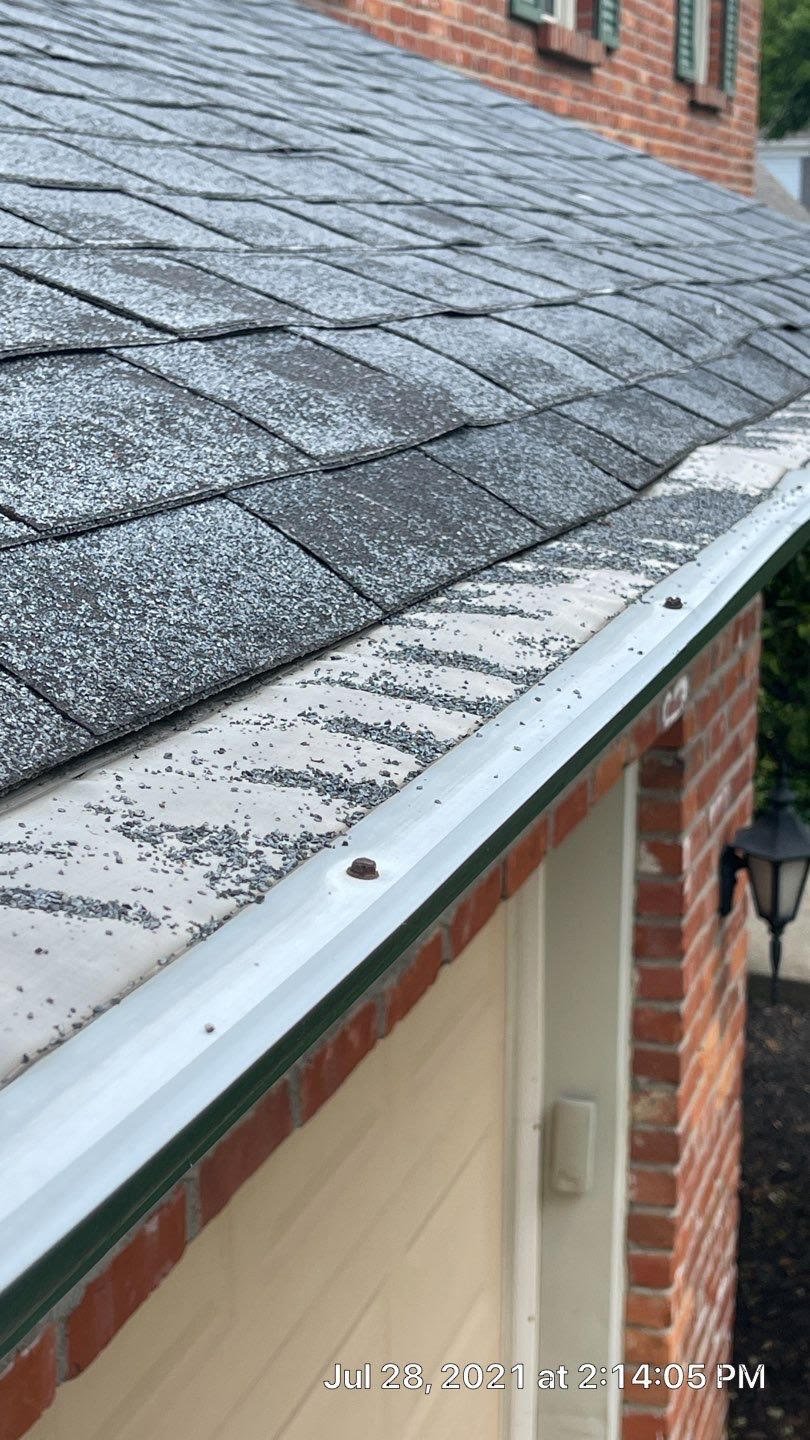
Check your gutters and downspout exits for an unusual accumulation of black, sand-like granules. All asphalt shingles shed some granules over their lifetime — but a sudden, heavy deposit after a storm indicates hail has stripped the protective coating. According to NRCA studies, significant granule loss can accelerate shingle aging by 5 to 7 years.
Hail Damage on Different Roofing Materials
Different roofing materials react differently to hail impact. Knowing what to look for on your specific roof type prevents missed damage.
| Material | Hail Damage Signs | Severity |
|---|---|---|
| Asphalt Shingles | Black bruises, granule loss, soft spots, cracks, exposed mat | Most vulnerable — damage often invisible from ground |
| Metal Roofing | Round dents, chipped paint, loosened seams | Usually cosmetic — rarely affects function |
| Wood Shakes | Sharp splits with brown/orange fresh wood, impact dents along splits | Moderate — splits create water entry points |
| Tile/Slate | Chipped corners, broken tiles, cracked glaze, exposed underlayment | Obvious when present — pieces break off |
Metal roofs deserve special mention for Columbus homeowners considering upgrades. While hail can dent metal panels — especially thinner gauges — the denting is almost always cosmetic and doesn’t compromise the roof’s weathertightness. Metal roofs with a Class 4 impact rating (UL 2218) are specifically tested to withstand 2-inch hailstones without cracking or puncturing. Some insurers offer premium discounts for Class 4 rated roofing.
Don’t forget ridge caps, flashing, and vents. Ridge caps sit at the highest point of the roof and take the most direct hits. Metal flashing around chimneys, skylights, and pipes will show dents even when shingles nearby look fine. Plastic pipe boots and vent covers can crack from impact.
Blistering vs. Hail Damage: How to Tell the Difference
This distinction trips up homeowners and even some adjusters. Roof blistering and hail damage create similar-looking craters on shingles, but their causes — and insurance implications — are completely different.
| Factor | Blistering | Hail Damage |
|---|---|---|
| Cause | Internal — trapped moisture or manufacturing defects expand under heat | External — hailstone impact |
| Appearance | Raised bubbles that pop into steep-sided craters with rigid walls | Concave dents with granules crushed into the shingle mat |
| Feel | Firm, rigid sidewalls — no underlying softness | Soft, spongy feel under the impact point (mat bruising) |
| Pattern | Clustered or widespread, following heat/sun exposure patterns | Random distribution across roof slopes |
| Insurance | Usually NOT covered (manufacturing defect) | Typically covered (weather event) |
The stakes are significant. Filing a claim for blistering damage that gets classified as a manufacturing defect wastes time and can flag your account. Conversely, dismissing real hail damage as blistering means missing legitimate coverage. If you’re unsure, a professional inspection resolves the question in minutes — and prevents costly mistakes in either direction.
What Size Hail Causes Roof Damage?
Hail doesn’t need to be golf-ball-sized to cause real damage. Here’s how hailstone size correlates with roof impact:
| Hailstone Size | Comparison | Typical Roof Damage |
|---|---|---|
| ¾ inch | Penny | Minor granule loss on aging shingles |
| 1 inch | Quarter | Granule loss, bruising on asphalt shingles |
| 1.25 inches | Half dollar | Significant granule loss, soft spots, cracked shingles |
| 1.75 inches | Golf ball | Severe cracking, punctures possible, metal denting |
| 2.75 inches | Baseball | Catastrophic — punctures, structural damage to any material |
Hailstone density, wind speed, and roof age all affect the equation. Quarter-sized hail driven by 60 mph winds hits with significantly more force than the same hail falling straight down. And a 15-year-old roof with existing granule wear is far more vulnerable than a new one. The bottom line: if you had 1-inch or larger hail in your area, your roof should be inspected. For the complete size-by-size breakdown — including when smaller hail still causes damage — see our guide to what size hail damages a roof.
How to Document Hail Damage for Insurance
Proper documentation is the difference between a smooth claim and a denied one. Insurance adjusters need specific evidence tied to a specific storm event. Here’s what to capture:
Immediately After the Storm
- Time-stamped photos: Wide shots of the entire roof from multiple angles, plus close-ups of every damaged area. Most smartphone cameras embed date and location data automatically.
- Collateral damage photos: Dented gutters, siding marks, damaged AC units, vehicle dents — all confirm the storm’s intensity.
- Storm date and details: Note the date, approximate time, estimated hail size, and wind conditions. Weather records can be pulled later, but your notes help.
- Hailstone evidence: If you can safely collect a few hailstones, photograph them next to a ruler or coin for scale. Store them in a freezer if possible.
Insurance Claim Timeline
Most insurance policies require claims within one to two years of the storm event — but don’t wait. File as soon as you confirm damage for three reasons:
- Fresh damage is easier to tie to a specific storm. After months of Ohio weather, the distinction blurs.
- Hidden damage — like moisture infiltration through bruised shingles — worsens over time.
- Multiple storms can create overlapping damage, making it harder to prove which storm caused what.
Our hail damage insurance claim timeline for Ohio lays out the exact deadlines step by step, from the storm date through depreciation recovery. For a deeper dive on the claims process, coverage types, and how to navigate adjusters, see our complete guide to hail damage roof replacement and insurance.
When to Call a Professional
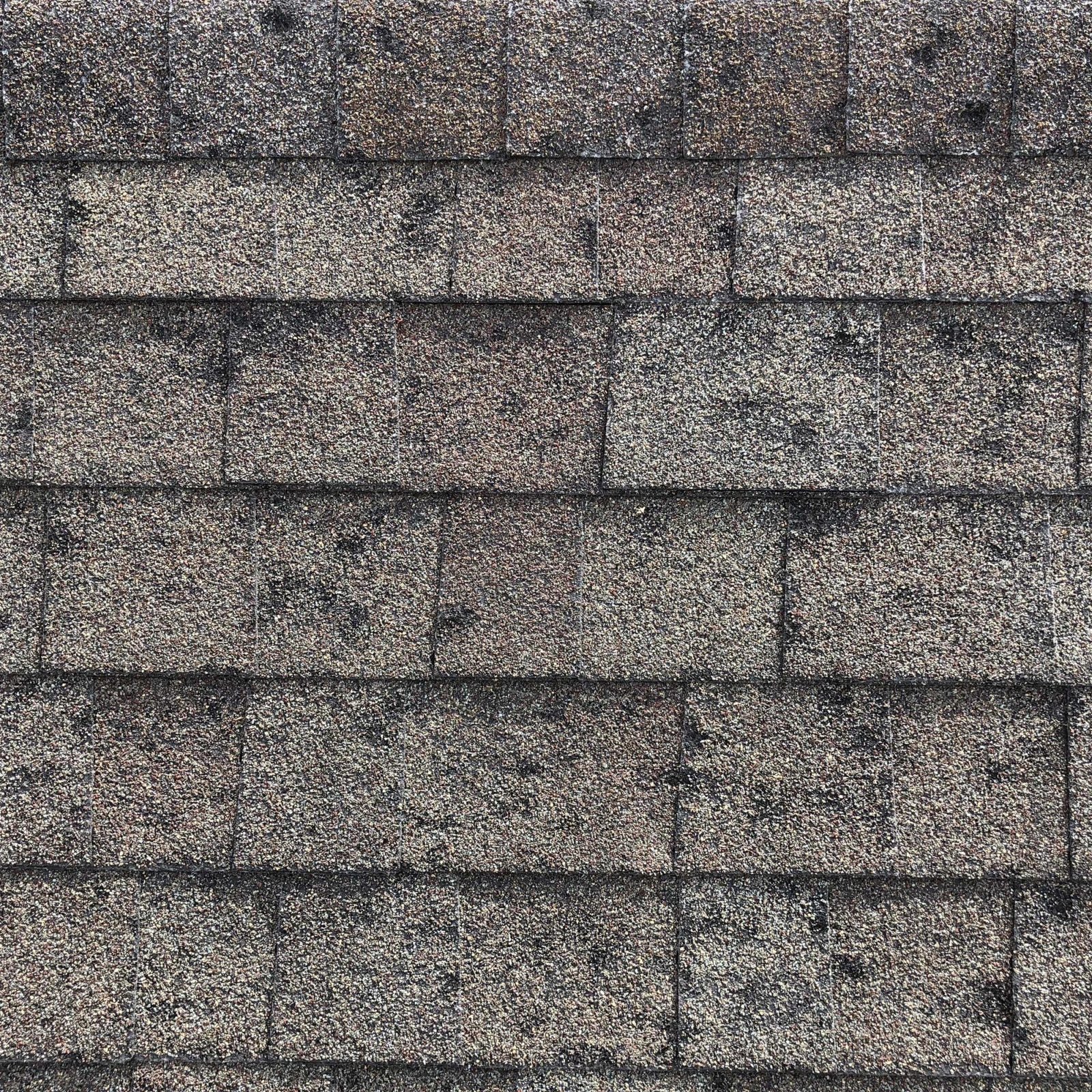
A ground-level walk-around gives you valuable clues, but it can’t replace a professional roof inspection. Here’s what a certified inspector does that you can’t safely do yourself:
- Systematic walk of the entire roof — valleys, ridges, chimneys, and hidden areas that aren’t visible from the ground
- Hands-on testing — the press test for spongy bruising, checking self-seal adhesion, and feeling for mat damage that photos can’t capture
- Chalk mapping — marking and counting every impact to meet insurer thresholds (typically 8-10 hits per 100 square feet triggers replacement)
- High-resolution documentation — photos and measurements that meet insurance company requirements
- Collateral assessment — checking flashing, vents, plumbing boots, and skylights that homeowners typically miss
Insurance adjusters evaluate damage using test squares — 10×10-foot sections of roof. They count impacts within each square to determine whether damage meets the threshold for repair or full replacement. A professional inspector knows exactly what adjusters look for and documents accordingly. Whether that count points to a patch or a new roof is its own decision — our guide to hail damage repair vs replacement breaks down the thresholds honestly.
Schedule an inspection within a week of any significant hailstorm. Exterior Alliance offers free, no-obligation inspections across Columbus, Dublin, Westerville, and all of Central Ohio. We document the damage, explain your options, and help you navigate the insurance process if a claim is warranted.
Consequences of Ignoring Hail Damage
Hail damage doesn’t heal itself. Untreated damage creates a cascade of increasingly expensive problems:
- Leaks: Bruised shingles and cracked seals let water infiltrate. Ceiling stains are the visible symptom — by the time you see them, water has already damaged insulation, drywall, and potentially framing.
- Mold and mildew: Moisture trapped in attic spaces creates conditions for mold growth, which is both a health hazard and expensive to remediate.
- Accelerated aging: Granule loss exposes asphalt to UV radiation, which dramatically shortens remaining shingle life. A roof that should last another 10 years might fail in 3-5.
- Future claim denial: If you file a claim for a later storm but your roof shows evidence of prior untreated damage, insurers can deny the claim based on lack of maintenance.
- Reduced home value: A damaged roof is a red flag in any home inspection and a negotiation point that can cost tens of thousands at closing.
The cost of a professional inspection is zero (we offer them free). The cost of ignoring damage is almost always higher than addressing it promptly.
Frequently Asked Questions
How long do I have to file a hail damage insurance claim?
Most policies require filing within one to two years of the storm, but don’t wait. Filing within 30 days gives you the strongest position — damage is fresh, documentation is clear, and there’s no question about which storm caused it. Review your specific policy for exact deadlines, as some carriers have shorter notification windows.
Will filing a hail damage claim raise my insurance rates?
Generally, no. Insurance companies classify hail as an “Act of God” — a weather event outside your control. A single weather-related claim is far less likely to increase your premium than a claim caused by negligence. However, widespread catastrophic events in a region can lead to overall rate adjustments for everyone in the area. If repair costs barely exceed your deductible, it may be more cost-effective to pay out of pocket.
Can I inspect my own roof after a hailstorm?
You can and should do a ground-level inspection using the techniques in this guide — checking gutters, siding, AC units, and using binoculars to scan the roof surface. However, never climb on a wet, steep, or potentially damaged roof. Leave the hands-on inspection to professionals who have proper safety equipment and training.
What’s the difference between cosmetic and functional hail damage?
Functional damage affects the roof’s ability to protect your home — bruised shingles, cracked seals, granule loss that exposes mat. Insurance typically covers functional damage. Cosmetic damage affects appearance but not performance — minor surface marks that don’t compromise weathertightness. Some policies exclude cosmetic damage. Understanding which type you have determines your coverage.
Protect Your Roof After the Next Storm
Hail damage is one of the most common — and most commonly missed — threats to Central Ohio homes. The signs are there if you know what to look for, but the window to act narrows with every passing week. Document what you find, understand the difference between real damage and normal wear, and get a professional assessment before making any decisions about insurance claims.
Exterior Alliance has inspected thousands of roofs across Columbus, Dublin, Hilliard, Westerville, and the surrounding area after hailstorms. Our team identifies all types of damage, provides honest assessments, and guides you through the insurance process when a claim makes sense. We’re BBB-accredited, fully insured, and we never pressure you into work you don’t need.
Schedule your free hail damage inspection or call us at (614) 363-3411. The inspection costs nothing — and catching damage early can save you thousands.
