
When you are lying in bed listening to the rhythmic plink-plink-plink of water hitting a plastic bucket, your first thought is usually about the cost. You pay your premiums every month, so it’s natural to ask: does homeowners insurance cover roof leaks from rain?
In the insurance world, coverage is dictated by “perils.” A peril is simply an event that causes damage. Most standard homeowners policies (like HO-3 or HO-5 policies) are “open peril” policies for your dwelling. This means they cover damage from any cause unless that cause is specifically excluded in the fine print.
Common Covered Perils
If rain gets into your home because one of the following “named perils” created a hole or opening in your roof, you are likely covered:
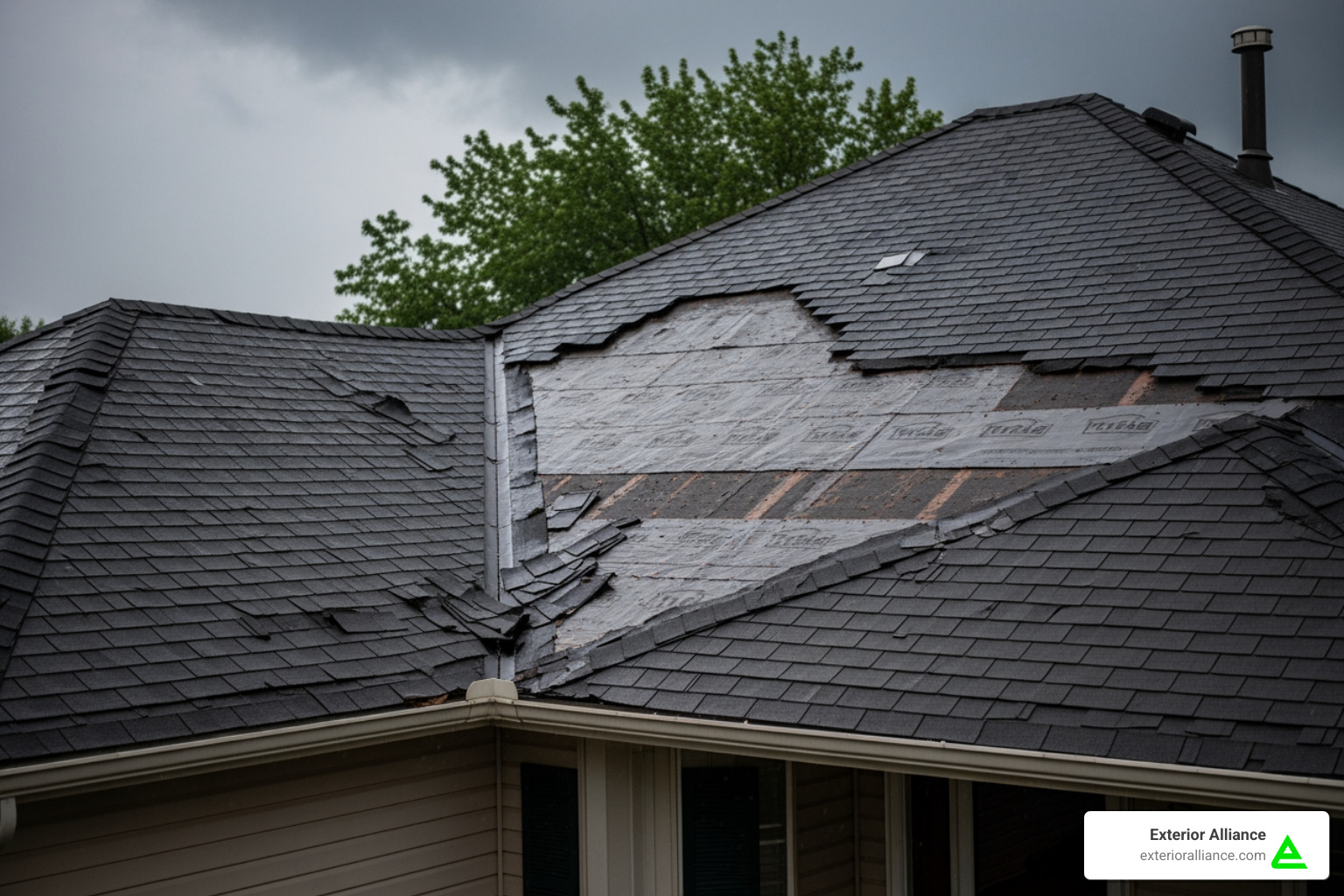
- Windstorms: High winds can lift, crack, or completely tear away asphalt shingles. If a gust of wind creates an opening and rain pours in, that is a sudden and accidental event.
- Hail Damage: Large hailstones can bruise shingles or crack slate and tile. Even if the leak doesn’t start until the next rainstorm, the hail is the “proximate cause,” making it a covered event.
- Lightning Strikes: While rare, lightning can strike a roof, causing physical damage or even a small fire that compromises the roof’s integrity.
- Falling Objects: If a storm knocks a heavy tree limb onto your roof in Dublin or Westerville, puncturing the decking, the resulting rain leak is covered.
- Weight of Ice and Snow: In Central Ohio, we deal with heavy snow loads. If the weight causes a structural failure or an ice dam forces water under the shingles, you may have a claim.
To better understand how these rules apply to your specific home, we recommend Understanding Your Roof’s Insurance Policy to see how different coverage levels affect your payout.
Covered Perils vs. Excluded Maintenance
It helps to see the comparison clearly. Insurance is meant to be a safety net for disasters, not a maintenance plan for your home.
| Covered Perils (Sudden) | Excluded Issues (Gradual) |
|---|---|
| Tornado or high wind damage | Normal wear and tear (age) |
| Hail impact | Lack of maintenance (clogged gutters) |
| Puncture from falling trees | Pest infestations (squirrels/pigeons) |
| Vandalism or fire | Improper initial installation |
| Weight of sleet/snow | Mold caused by poor ventilation |
When Rain-Related Roof Leaks Are Not Covered
While it would be nice if insurance covered every drip, there are several scenarios where a claim for a roof leak will be denied. Insurance adjusters are trained to look for signs of “pre-existing conditions.”
Wear and Tear and Roof Age
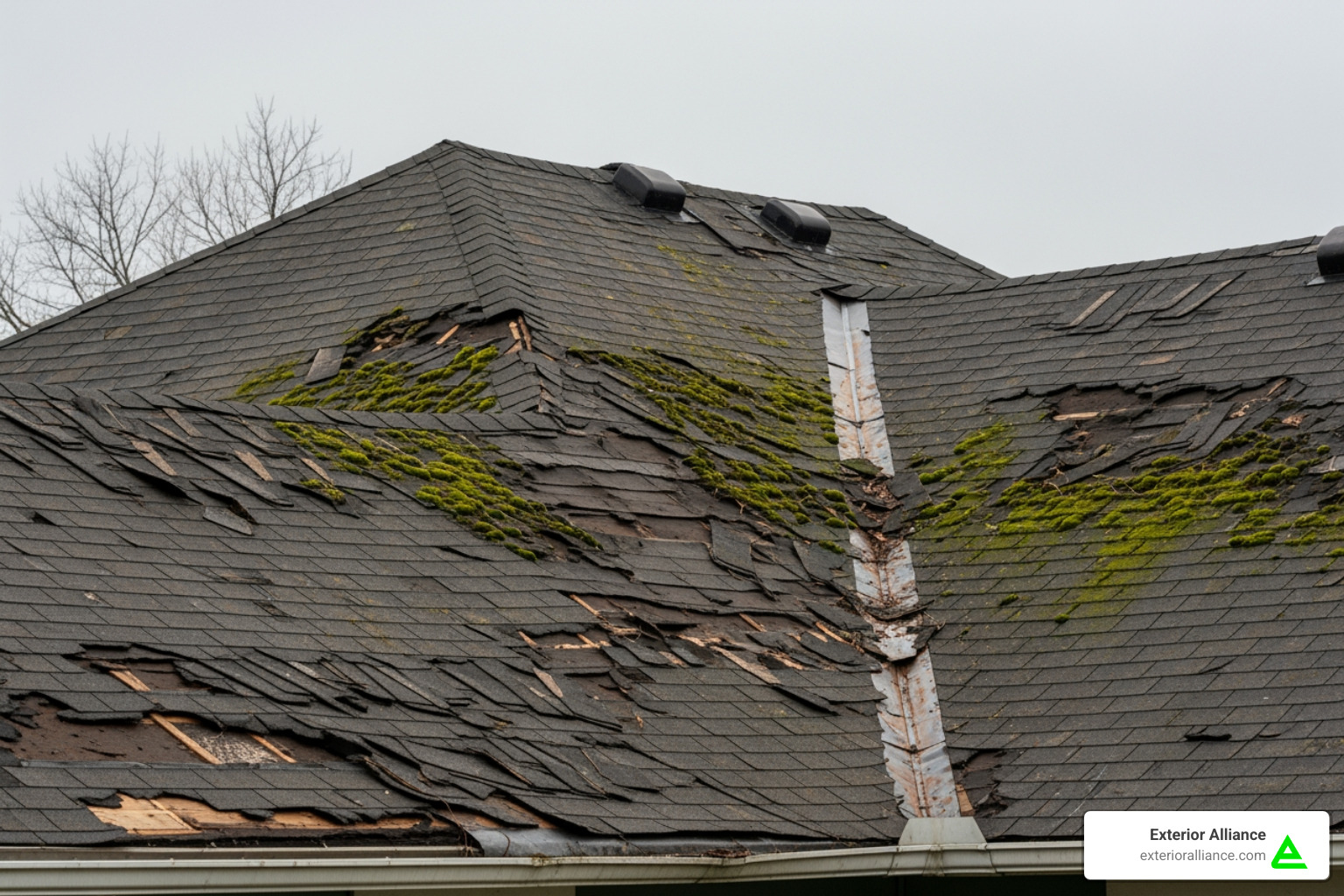
Roofs don’t last forever. An asphalt shingle roof typically has a lifespan of 20 to 25 years. If your roof is 28 years old and starts leaking during a standard rain shower, the insurance company will likely attribute the leak to “wear and tear.” They view this as a homeowner’s responsibility to replace the roof before it fails.
General Neglect and Maintenance
If you haven’t cleaned your gutters in three years and they become so clogged that rainwater backs up under your shingles, the insurance company may deny the claim. They expect you to perform basic upkeep to protect the structure. Similarly, if a small leak was visible for months and you did nothing to stop it, they may refuse to pay for the resulting rot because you failed to “mitigate the damage.”
Improper Installation
If a previous contractor installed the flashing incorrectly around your chimney or dormers, and it eventually starts leaking during a storm, the insurer might argue the fault lies with the workmanship, not a covered peril.
Pests and Animals
If squirrels or raccoons chew through your roof vents or shingles, allowing rain to enter, most policies exclude this. Damage caused by birds, vermin, or insects is generally considered a maintenance issue.
Flooding vs. Rain
It is vital to distinguish between rain falling from the sky and water rising from the ground. Does homeowners insurance cover roof leaks from rain? Yes. Does it cover water that seeps in through the foundation because of a heavy downpour? No. For that, you need separate flood insurance. You can check your local risk level using the FEMA Flood Map Search.
Understanding Coverage for Interior Water Damage and Mold
One of the biggest points of confusion for homeowners in places like Hilliard or Upper Arlington is what happens inside the house. Even if the insurance company decides not to pay for the roof repair itself (perhaps because the roof was too old), they might still cover the damage inside.
Does homeowners insurance cover roof leaks from rain and interior damage?
In many cases, yes. This falls under your Dwelling Coverage (Coverage A) and Personal Property Coverage (Coverage B).
If a covered peril causes the leak:
- Structural Repair: Insurance should pay to repair the drywall, paint the ceiling, and replace damaged insulation.
- Personal Property: If the rain ruins your sofa, electronics, or expensive mattress, your personal property coverage kicks in to help replace those items.
- Loss of Use: If the leak is so severe that you can’t stay in your home while repairs are being made, “Loss of Use” coverage can help pay for a hotel and additional living expenses.
If you are dealing with an active leak right now, you need to act fast. Check out our guide on Emergency Roof Leak Repair to see how to protect your interior from further destruction.
Does homeowners insurance cover roof leaks from rain and resulting mold?
Mold is a “gray area” in insurance. Generally, if mold grows as a direct result of a sudden and accidental covered leak, and you reported it promptly, the remediation costs are often covered (sometimes up to a specific limit, like $5,000 or $10,000).
However, if the mold is caused by a slow, gradual leak that went unnoticed for years, or by high humidity in a poorly ventilated attic, it will likely be excluded. Many policies have specific “Fungus and Wet Rot” exclusions. If you live in a high-risk area, you might want to look into the National Flood Insurance Program info for additional water-related protections.
The Financial Side: Repair Costs, Deductibles, and Claims
Before you pick up the phone to call your agent, you need to do a little math. Filing a claim isn’t always the smartest financial move.
Average Repair Costs
The cost to fix a roof leak can vary wildly depending on the severity. According to recent roof leak repair cost data, the average repair costs between $400 and $2,500.
- Minor fixes: Replacing a few shingles or resealing a vent pipe might cost $400 to $700.
- Moderate repairs: Fixing a valley or replacing a large section of flashing can run $700 to $1,500.
- Major repairs: Replacing rotted decking or large areas of underlayment can cost $1,500 to $5,000+.
Understanding Your Deductible
Your deductible is the amount you pay out of pocket before insurance kicks in. Most standard policies have a flat deductible of $500, $1,000, or $2,500. Some newer policies, especially in storm-prone areas, have a percentage-based deductible (often 1-2% of the home’s insured value).
For a home insured at $300,000 with a 1% wind/hail deductible, you would pay the first $3,000 of any wind or hail damage claim. This is why it’s sometimes more cost-effective to handle smaller repairs on your own.
The Claims Process Step by Step
- Document Everything: Take photos and videos of the damage from multiple angles. Document the date the damage occurred.
- Mitigate Further Damage: This is your legal obligation. Place tarps over the damaged area and buckets under leaks. Your policy may reimburse you for these temporary repairs.
- Contact Your Insurance Company: File the claim as soon as possible. Many policies require you to report damage within a specific window (often 30 to 60 days).
- Get Independent Estimates: Before the adjuster arrives, get a written repair estimate from a trusted local roofing contractor. This gives you a benchmark for comparison. You can schedule a free estimate with Exterior Alliance.
- Meet the Adjuster: The insurance company will send an adjuster to inspect the damage. If possible, have your contractor there to point out all affected areas.
- Review the Settlement: If the payout seems too low, you have the right to negotiate or hire a public adjuster.
How to Protect Your Roof and Your Claim
The best way to ensure your claim is approved when the time comes is to be a proactive homeowner. Here are several steps you can take right now.
Schedule Annual Inspections
Having a professional inspect your roof every year (and after every major storm) creates a documented history. If you ever need to file a claim, you can prove the roof was in good condition before the event. Many Columbus homeowners trust Exterior Alliance for professional roof inspections.
Keep Maintenance Records
Save receipts for every repair, gutter cleaning, and professional inspection. Store them digitally so they are never lost. This documentation is your strongest weapon against a claim denial based on “neglect.”
Review Your Policy Annually
Insurance policies change. Your coverage at renewal might differ from the previous year. Pay close attention to any changes in your wind/hail deductible, your dwelling coverage limits, and any new exclusions for roof age.
Consider Upgrading Your Roof
If your roof is nearing the end of its life, upgrading to impact-resistant shingles (like Class 4 rated shingles) can sometimes get you a discount on your insurance premiums. It’s an investment that pays for itself in lower premiums and better protection. To learn about this option, read more about roof replacement costs in 2025.
Frequently Asked Questions
Should I file a claim for a minor roof leak?
Probably not. If the repair is under $1,000 and your deductible is $500, you only get $500 from the insurance company. However, that claim stays on your record for years and could cause your premiums to go up by more than the $500 you received. It’s often better to pay for minor repairs out of pocket.
How does roof age affect my insurance coverage?
Age is the biggest hurdle. If your roof is over 20 years old, many insurers will only offer ACV (Actual Cash Value) coverage, or they may refuse to cover the roof at all, only covering the interior damage. Keeping records of your annual inspections can help prove the roof was in good shape prior to a storm.
Does insurance cover a full roof replacement for a leak?
Not always. Insurance typically only pays to repair the damaged area. However, if the damage is widespread (like hail damage on every slope) or if the shingles are no longer manufactured and cannot be “matched” according to local building codes, you may be eligible for a full replacement. Replacing an asphalt roof can cost around $7,500, while a metal roof can exceed $40,000, so having insurance cover this is a major financial relief. You can see more on roof replacement cost data to help plan your budget.
Conclusion
Navigating insurance can be a headache, especially when you’re dealing with the stress of a leaking roof. The answer to “does homeowners insurance cover roof leaks from rain” isn’t always a simple yes, but understanding the “sudden and accidental” rule gives you the best chance of a successful claim.
At Exterior Alliance, we are your local experts in Dublin, Columbus, and across Central Ohio. We don’t just fix roofs; we specialize in storm restoration and helping our neighbors navigate the complex insurance claim process. We are bonded, insured, and proud of our BBB A+ rating. Whether you have a minor drip in Pataskala or major storm damage in New Albany, we are committed to excellence.
Don’t let a small leak turn into a structural disaster. If you suspect your roof has been damaged by a recent storm, contact us today.
Ready to protect your home? Schedule a Storm Damage Inspection with our expert team today!
