
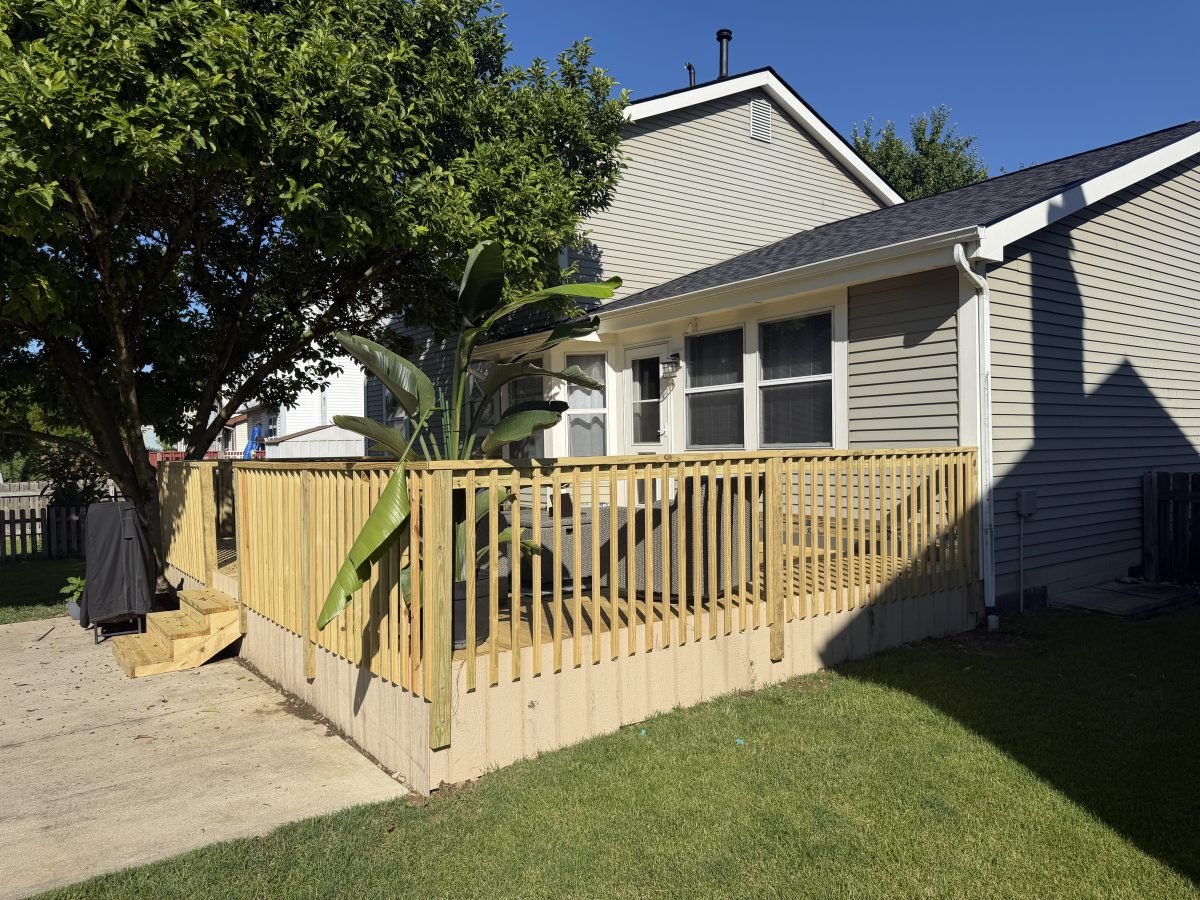
Columbus homeowners have figured out what the rest of the country already knows: a well-built deck adds usable square footage, boosts resale value, and makes a backyard actually worth spending time in. The demand for outdoor living space has driven deck building across Central Ohio — from ground-level platforms in Westerville to multi-level structures with built-in seating in New Albany and Dublin.
Exterior Alliance has spent years protecting Columbus homes from the outside — roofing, siding, gutters, and exterior work of every kind. We’ve now expanded into deck building services, bringing the same licensed, insured, and warrantied approach we use on roofing to custom deck construction. If you’re planning a deck build in Columbus or the surrounding area, here’s everything you need to make a smart decision on materials, budget, and who to hire.
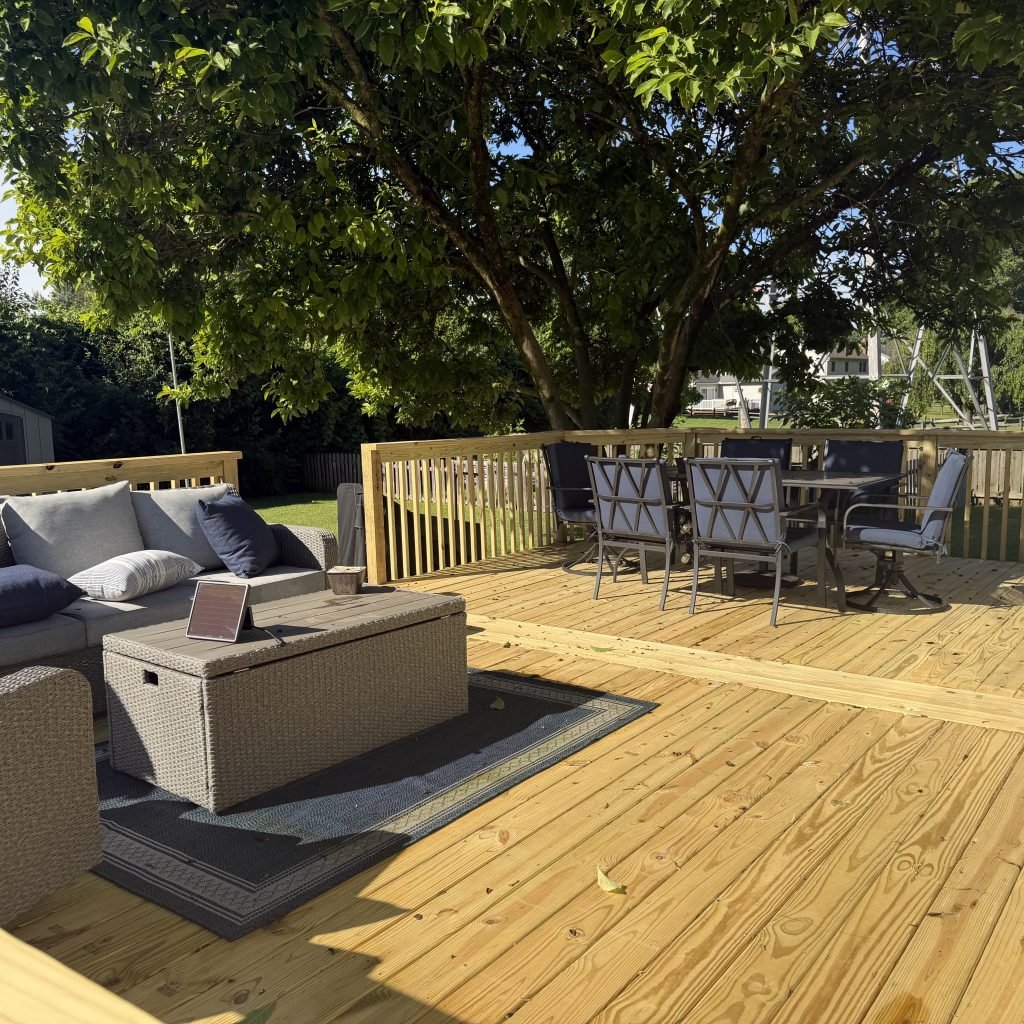
How Much Does It Cost to Build a Deck in Columbus, Ohio?
Deck cost in Columbus varies significantly based on size, material, design complexity, and site conditions. Here are realistic installed ranges for the Central Ohio market in 2026:
| Deck Type | Cost Per Square Foot (Installed) | Typical Total (300 sq ft deck) |
|---|---|---|
| Pressure-Treated Lumber | $20 – $35 | $6,000 – $10,500 |
| Cedar or Redwood | $30 – $50 | $9,000 – $15,000 |
| Composite (Trex, TimberTech) | $45 – $75 | $13,500 – $22,500 |
| Multi-level / Custom Design | $65 – $100+ | $19,500 – $30,000+ |
A 300 square foot deck is a reasonable baseline for a Columbus backyard — large enough for a dining table, seating area, and grill without overwhelming a typical lot. Smaller 10×10 or 10×12 platforms run $4,000 to $8,000 depending on material. Larger multi-level builds with railings, stairs, and built-in features climb accordingly.
Factors that move the number up or down:
- Ground-level vs. elevated: Elevated decks require more structural framing, post footings, and in some cases engineering review — adding cost.
- Railings: Composite or aluminum railing systems add $60 to $150 per linear foot installed. Cable railing runs higher.
- Stairs: Each stair run adds $300 to $1,000 depending on material and length.
- Site access and ground prep: Sloped yards, tight access, or extensive grading add labor.
- Lighting, built-ins, and pergolas: These features add significant value but increase project cost proportionally.
Financing is available for deck projects — the same financing options we offer for roofing and exterior work apply to deck builds as well.
Wood vs. Composite Decking — Pros & Cons for Ohio Weather
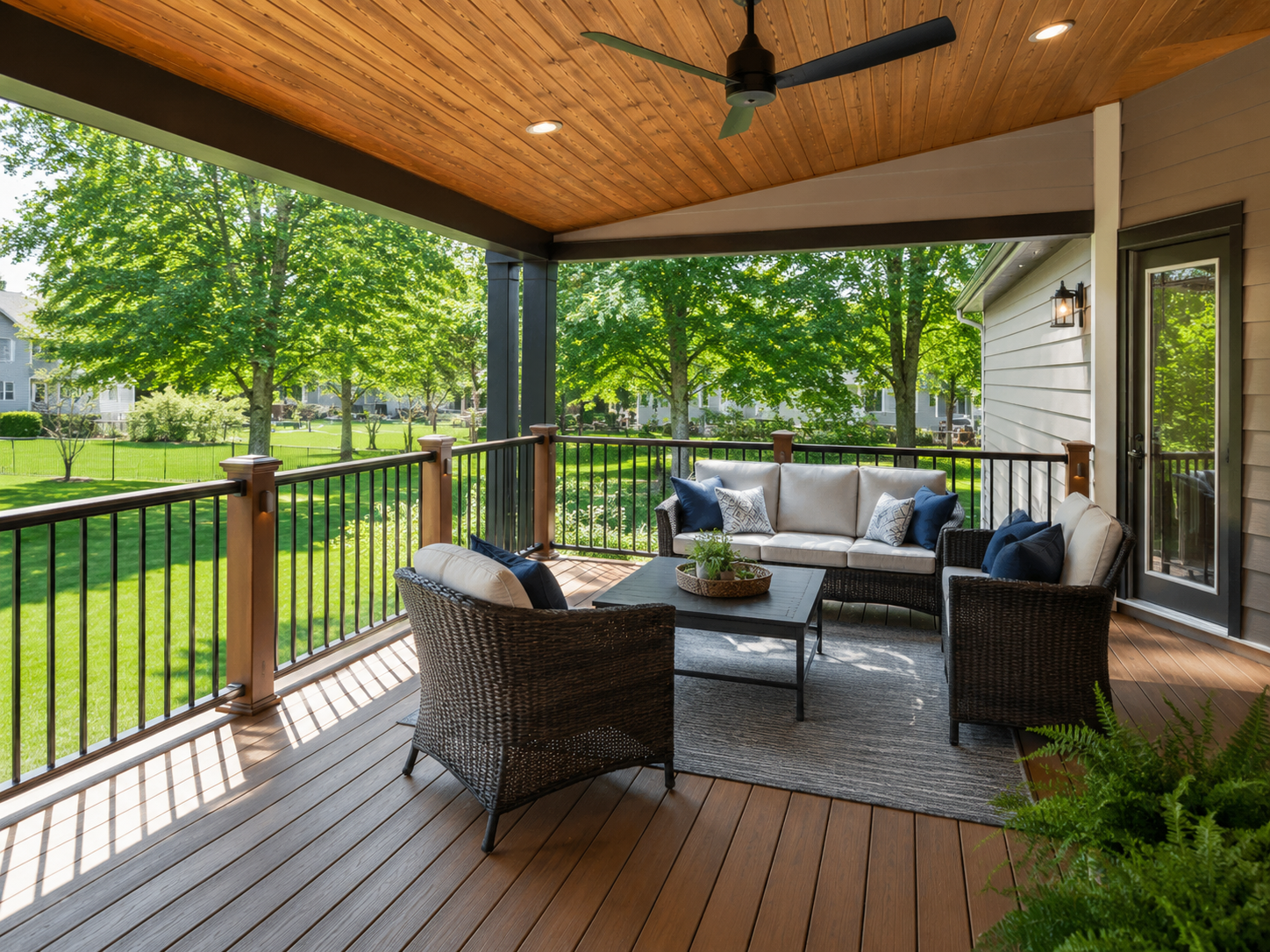
Ohio’s climate is harder on outdoor materials than most homeowners realize. Columbus sees hot, humid summers, freeze-thaw cycles from November through March, and occasional ice storms that sit on surfaces for days. The material you choose will determine how much maintenance your deck demands over its lifetime.
Pressure-Treated Wood
The most affordable option upfront. Pressure-treated lumber is chemically treated to resist rot and insect damage, which matters in Ohio’s humid summers. It takes stain and paint well, and framing lumber is almost always pressure-treated regardless of what decking material goes on top.
The tradeoff: wood moves. Columbus’s temperature swings cause wood to expand in summer and contract in winter, which leads to warping, cupping, cracking, and fastener pop over time. A pressure-treated deck needs to be cleaned, sealed, and re-stained every 2 to 3 years to maintain its appearance and structural integrity. Neglected, it deteriorates noticeably within 5 to 7 years.
Cedar and Redwood
Natural rot resistance, better dimensional stability than pressure-treated, and a more refined appearance. Cedar in particular is a popular upgrade for Columbus homeowners who want a natural wood look with better long-term performance. It still requires annual sealing in Ohio’s climate, but it holds up better than pressure-treated when maintained.
Composite Decking
Composite boards are manufactured from a blend of wood fiber and recycled plastic. They don’t rot, splinter, or require staining. In Ohio’s climate, composite’s resistance to moisture absorption is a significant advantage — it won’t warp or cup through freeze-thaw cycles the way natural wood does. Composite decks cost more upfront but require virtually no maintenance beyond an annual wash.
For most Columbus homeowners comparing 10-year total cost of ownership — material, installation, and ongoing maintenance — composite and wood end up closer than the initial price difference suggests. And composite looks better longer.
Popular Deck Materials We Install
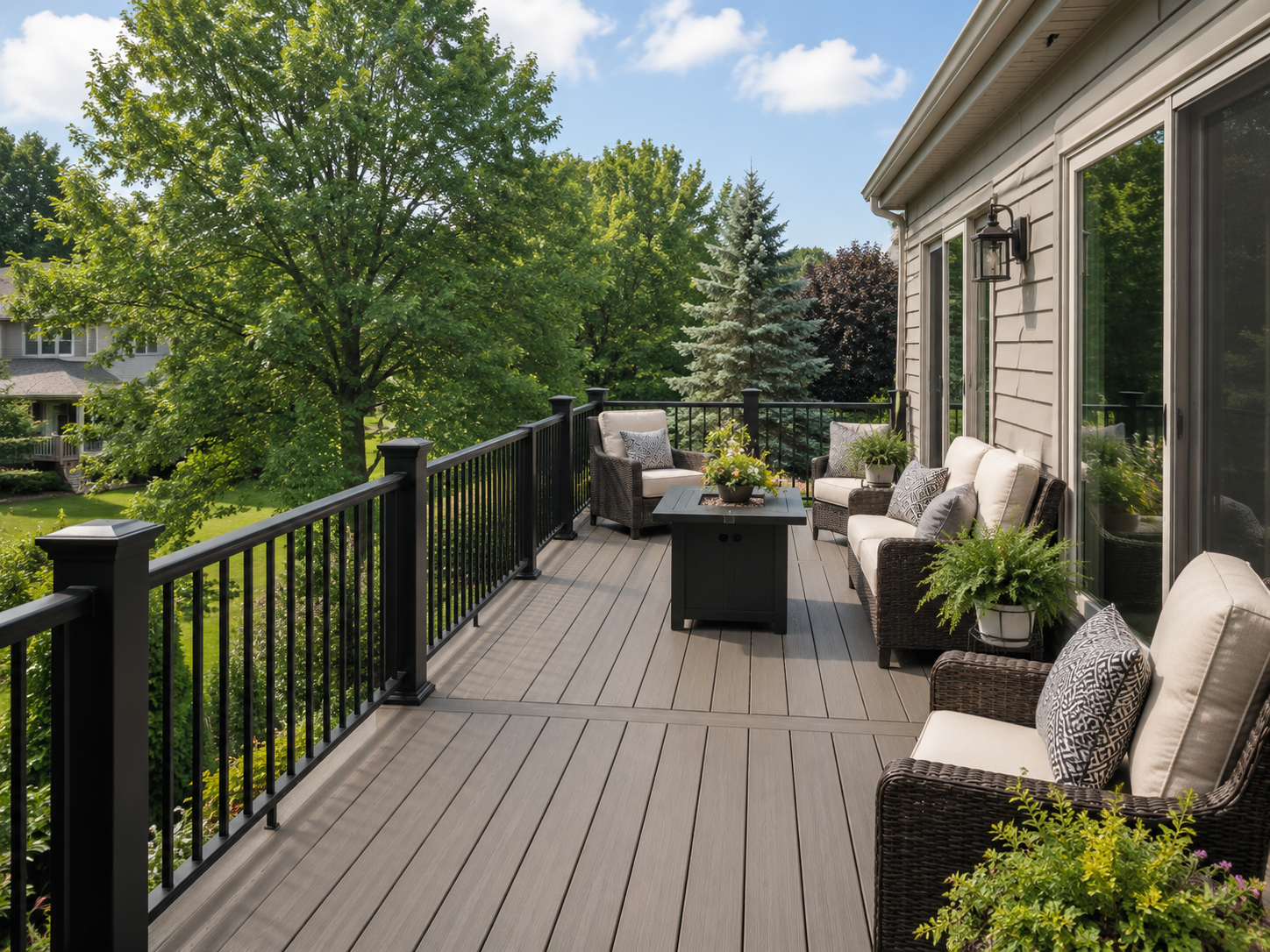
Trex
The market leader in composite decking for good reason. Trex boards are made from 95% recycled material, carry a 25-year fade and stain warranty, and come in a wide range of colors and finishes — from natural wood looks to contemporary solid tones. Trex Transcend and Trex Select are the two most popular lines in Columbus residential projects. Both hold up extremely well in Ohio conditions.
TimberTech
A premium composite and PVC decking brand with strong performance in high-moisture environments. TimberTech AZEK (full PVC) is the top-of-the-line option — zero wood fiber content means zero moisture absorption, which translates to outstanding dimensional stability in freeze-thaw conditions. Popular on elevated decks and covered outdoor living spaces.
Pressure-Treated Lumber
Still the standard for deck framing regardless of what decking surface you choose. For decking boards themselves, pressure-treated is the entry-level option — best suited for homeowners with a tight budget who are committed to regular maintenance, or for rental properties where cost control is the priority.
Cedar
The natural wood option for homeowners who want the look and feel of real wood with better rot resistance than pressure-treated. Cedar pairs well with natural finishes and fits the aesthetic of craftsman and traditional home styles common in Columbus’s established neighborhoods.
View completed deck projects in our project gallery to see these materials installed on Central Ohio homes.
Do You Need a Permit to Build a Deck in Columbus?
Yes — in almost every case. The City of Columbus and Franklin County require building permits for deck construction, and the requirements are specific:
- Any deck attached to a home requires a permit regardless of size
- Freestanding decks over 200 square feet generally require a permit
- Elevated decks over 30 inches above grade require a structural review
- Decks with electrical (lighting, outlets) require a separate electrical permit
Permit requirements vary slightly by municipality — Dublin, Westerville, and Hilliard each have their own building departments with specific submission requirements. Exterior Alliance handles the permit application as part of every deck project. This matters for two reasons: an unpermitted deck can create significant complications during a home sale, and permitted work is inspected — which protects you if questions ever arise about structural integrity.
We also handle fence installation throughout the Columbus area, which frequently requires its own permit in Franklin County.
How to Choose a Deck Contractor in Columbus
Deck building has a lower barrier to entry than roofing — which means more unqualified operators in the market. Here’s what to look for when evaluating Columbus deck contractors:
- Ohio contractor registration: Verify the contractor is registered with the Ohio Construction Industry Licensing Board. This isn’t optional — it’s the law for contractors working on residential structures.
- General liability and workers’ comp insurance: Ask for certificates of insurance. If a worker is injured on your property and the contractor carries no workers’ comp, you may be liable.
- A real portfolio: Ask to see completed decks — not just renderings. Local references from Columbus homeowners are better than Houzz photos.
- Written, itemized contracts: Material specifications, fastener type, post footer depth, framing lumber species — these details should all be in the contract, not verbal agreements.
- Warranty on labor: Material warranties come from the manufacturer. A quality contractor stands behind their installation with a separate workmanship warranty.
- Permit handling: If a contractor suggests skipping the permit to save time or money, walk away.
Our team page shows who you’ll be working with — we’re not a call center that dispatches unknown subcontractors. You know who’s building your deck before they show up.
Our Deck Building Process
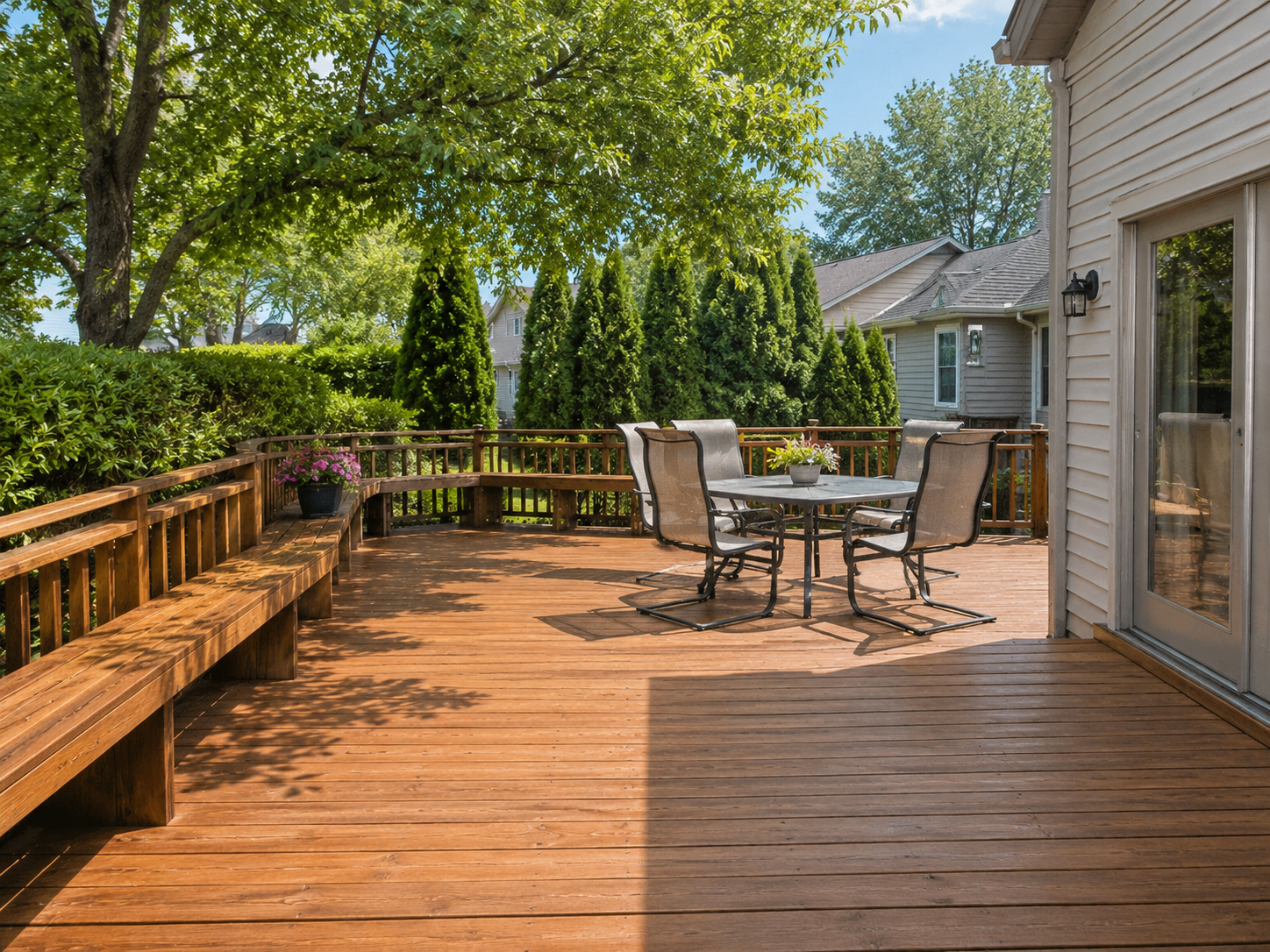
Here’s what a deck project with Exterior Alliance looks like from first call to final inspection:
- Free consultation and site visit. We come out to your property, assess the site, discuss your goals and budget, and take measurements. No charge, no obligation.
- Design and material selection. We provide a deck layout with dimensions, material options, and an itemized quote. If you want to see how different materials or configurations affect price, we’ll run those numbers for you.
- Permit application. We handle submission to the relevant building department — Columbus, Dublin, Westerville, or wherever your project is located.
- Site prep and footing installation. Footings are poured to the depth required by local frost line requirements — in Franklin County, that’s typically 36 inches. This step is non-negotiable for deck longevity in Ohio’s freeze-thaw climate.
- Framing. Structural framing goes up using pressure-treated lumber sized to span requirements. Ledger attachment to the home’s rim joist is done with code-compliant hardware and flashing to prevent moisture intrusion at the connection point.
- Decking, railings, and stairs. Surface boards are installed, railings set to code height requirements, and stairs built to proper rise/run ratios.
- Final inspection. The city or county inspector signs off on the completed structure. You receive the permit closeout documentation.
We serve Columbus and surrounding communities — see our full list of deck service areas to confirm we cover your location.
Frequently Asked Questions
How long does it take to build a deck in Columbus?
A standard ground-level or single-level deck typically takes 3 to 5 days of construction once materials are on-site and permits are in hand. Permit processing in Columbus and Franklin County currently runs 2 to 4 weeks depending on project complexity and department workload. Plan 4 to 6 weeks from signed contract to completed deck for a straightforward project.
What’s the best time of year to build a deck in Ohio?
Spring through early fall is ideal — late April through October gives the best working conditions and avoids frozen ground that complicates footing installation. That said, we build decks year-round in Columbus when conditions allow. Concrete footings can be poured in cold weather with proper precautions. If you want a deck ready for summer, the contract should be signed no later than April.
How long does a composite deck last in Ohio?
Quality composite decking from Trex or TimberTech carries 25-year warranties and realistically lasts 30 or more years with minimal maintenance in Ohio conditions. Pressure-treated wood, when properly maintained, lasts 15 to 25 years. The framing underneath — pressure-treated lumber — has a similar lifespan when properly installed with adequate ventilation and drainage.
Can you build a deck and handle other exterior work at the same time?
Yes — and it’s often more efficient to bundle projects. If you’re considering a deck alongside siding replacement or roofing services, we can coordinate both under one project timeline, reducing total disruption and in some cases reducing mobilization costs.
Do you offer financing for deck projects?
Yes. We offer financing options that cover deck builds the same way we handle roofing and exterior projects. If you’d prefer to spread the cost over time rather than pay upfront, ask about financing when you request your estimate. Details are on our financing page.
Get a Free Deck Estimate in Columbus, Ohio
If you’re ready to add a deck to your Columbus home, we’re ready to build it. Exterior Alliance brings licensed, insured, permitted construction and a no-pressure estimate process to every project. We’ll come out, assess your space, and give you an honest quote on what it takes to build the deck you actually want.
